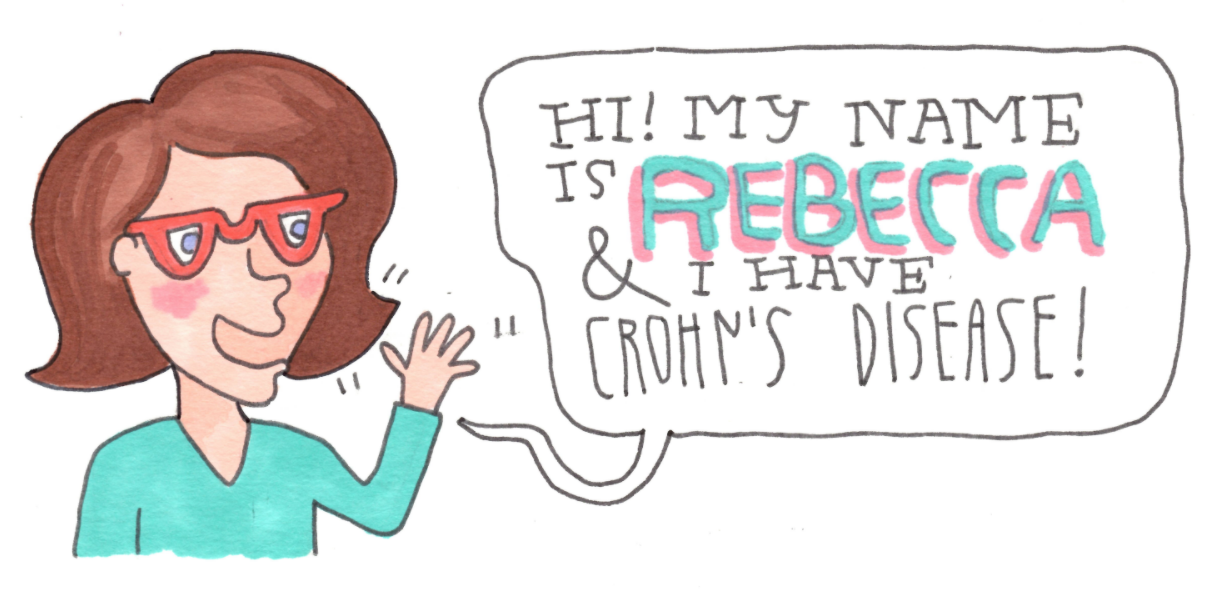
One year, 9 month update

I am now able to eat a wide variety of foods, and am not limited to a vegan diet. My diet now is a semi-vegetarian diet, with cheese and egg, and occasional meat. I started eating chicken since I can’t tolerate tofu, and found that it provided satiety and energy my body appreciated. I added cheese and egg, because, quiche.

I went back to work at 30 hours a week in the school building in August. I also was doing grad school 20 hours a week which was insane. As such, I went back on medical meal replacement shakes (Kate Farms nutritional shakes) for my breakfasts. On average I would have 2-3 shakes a day, and some snacks at work, and then a larger meal when I got off work. This was basically a stand in for the lack of self-care, rest and sleep and low stress, that I could no longer practice because of my work and school situation.

I have experienced pain flares since returning to work (after a 12 hour work day/ parent teacher conferences) but I have not had a full blown Crohn’s flare. I am pretty convinced, from my case study n=1 on myself, that PEN and EEN are what have made it possible for me to return to real life after my last flare. With no side effects! And no prescription!!

Things I still omit from my diet and don’t tolerate: tofu, animal milk, animal yogurt, excessive oil.

That’s about it!

I also feel pretty confident from my experience that I have a game plan for my next eventual flare and how to handle it.

Going forward, I am interested in investigating the links between Crohn’s disease and disordered eating. It is REALLY HARD to have a healthy relationship with food while your body is rejecting food, and while certain foods are causing you excruciating pain. Restriction is super triggering for people who are raised in a toxic diet culture that actively shames fatness and is dripping with anti-fat bias. I have been working on my own relationship with food and fatness and diet culture over the past year, and in reviewing my past posts, would take a slightly different approach to diet and Crohn’s.

Namely, I want to lift up that certain medications and illnesses cause weight gain, and that weight gain itself does not cause illness. Weight gain is not a sign of personal weakness or lack of health. For me, steroids, antidepressants and thyroid issues have caused significant weight gain since I was diagnosed with Crohn’s. Also, rapidly losing 10% of my body weight when I was incredibly sick with my first flare led to a rapid weight rebound once I was able to tolerate food again. This was my body literally trying to keep me alive, to reach equilibrium, and to store some extra energy in case the illness and weight loss / famine happened again.

The societal narrative that being fat causes disease is total trash. Bodies are all different weights, and for a lot of different reasons. When you are recovering from a serious illness, you need to focus on eating ENOUGH, as I’ve said before: eating enough calories for certain, but especially eating enough nutrients to help your body heal and repair itself.

This means providing loving and nourishing food to your body, and not restricting and depriving your body. It also requires giving your body lots of rest and being very mindful of stress. I still sleep 12 hours a day when I can, this is my body’s default. I also work to have strict time and energy boundaries with work, grad school, family and social time, and time for rest.

Breakfast Berry Crisp

This isn’t really a crisp but with about 7 minutes you can trick yourself into thinking you’re eating one.

  • Microwave 1-2 cups of assorted frozen berries for 2 minutes.
  • Boil 1 cup water with a dash of salt. Add 1/2 cup rolled oats and cook to the consistency you like, about 4-5 mins.
  • Combine the oatmeal and the berries, add a spoon of brown sugar or maple syrup (optional).
  • To make your crisp, throw in 1/4 cup of walnuts or praline pecans.

Sweet Potato Waffles with Berries

I’m still tweaking this recipe so please forgive me if it comes out a little weird. (It might need like 1/3 cup of flour to help it hold together?)

In a blender,

1 cup oats (blend into flour, then add:)
1 1/2 cup baked sweet potato
1 T baking powder
1/4 t salt
3 T coconut oil
3 T coconut sugar (or other sugar)
1 T chia seeds
about 1 cup water, add less or more until you get the consistency of waffle batter.

Blend all of that stuff up and then pour into your heated waffle iron. While the waffle is cooking, dump 2 cups of assorted frozen berries into a bowl and microwave for 2 minutes. Squish them a little with a fork when they are done to make a juicy mess.

Remove your cooked, piping hot waffle from the waffle iron and top with the hot berries. You can add a little maple syrup if you want, but you won’t need a lot because of the berries.

My endocrinologist informed me that my thyroid was perfectly medicated and I shouldn’t be experiencing fatigue from hypothyroidism. She said I should eat lots of greens and berries and be a “fancy vegan” to help get more energy while dealing with Crohn’s. The struggle continues.

10 Month Update

It has been 10 months since my last flare, which started the first two weeks of April 2021. As soon as my flare started, I implemented dietary changes to put myself in remission. Specifically, I started drinking medical meal replacement shakes for half of my calories and eating a whole foods plant based diet for the other half. My intervention was based off of the Crohn’s Disease Exclusion Diet currently being researched by Dr. Arie Levine in Israel. There are a number of meal replacements out there, like Nestle Modulen, formulated specifically for Crohn’s disease. I used Kate Farm’s chocolate nutrition and standard 1.0 shakes (vegan and organic). Perhaps more important than what I did eat is what I DIDN’T eat; I eliminated the foods typically known to cause inflammation or allergic response. So no soy, dairy, wheat, corn, peanuts, and also no meat or animal products.

The first few months were very restricted, but the shakes helped me easily meet my calorie requirement for the day. Most days I ate a smoothie with banana and berries (and sometimes spinach although green smoothies are not my favorite), fresh vegetable juice (beet carrot ginger celery apple), a hot veg soup pureed, and potatoes that had been baked, cooled, and then baked again (tossed in a little olive oil). This was very boring and I nearly went insane.

I noticed major improvement in my energy around 2 months, in mid-June. I started trialing foods to add back in to my diet around that time. Corn and peanuts were no problem. I ate a lot of blended foods, however, and it took a few more weeks for me to be able to tolerate raw vegetables. Soy, dairy and wheat still caused problems. Adding in legumes caused a noticeable change in my guts, but after a couple days it evened out and I was good to go with lentils and beans. Vegetarian refried beans really helped with the transition!

At around 6 months I was eating raw fruit and veg, cooked veg, nuts, corn flour, oats, beans and legumes, all pretty much without incident. But it took until month 10 to really see some BMs that I recognized as absolutely regular 4s. 10 months! I am now also tolerating wheat in limited portions.

It is amazing to me that it took 10 months to heal from a 2 week Crohn’s flare. It is likely that I had underlying and ongoing inflammation from my July 2020 flare that I treated with steroids. But it’s also possible that it just takes the body a REALLY LONG TIME to get it’s shit together.

I think it’s also really important to note that in addition to diet, I made major changes in my work life to reduce stress. I took April and May 2021 off work, then had the summer break, then after about a month of being back at school quit classroom teaching and switched to a remote work from home situation. I don’t want to play around with stress anymore, it’s not worth it for my overall health. I don’t have a permanent work from home situation worked out yet, but I am in graduate school for education now and I hope that an advanced degree will give me more flexibility with my future work. I might also be able to go back into the classroom, but I think the coronavirus pandemic will need to chill out a lot more for me to be able to do that without it giving me insane levels of stress.

These days, I am no longer drinking meal replacement shakes and I get 100% of my calories from solid foods. I have been eating grains, beans, raw and cooked veg and fruit, nuts, and some processed foods like vegan egg and cheese. We live in a pretty magical time of food science where there are delicious and not-soy-based vegan products in the world. Totally different scenario than when I went vegan in 2007!

I would also like to brag that I finally figured out a whole foods plant based quiche that is damn good, after many many trials. Many a quiche was harmed in the making of that recipe.

Finding inspiration to keep eating a very restricted diet has been important for me getting this far. I read a lot of medical studies about diet and IBD to give me hope. I read a lot of testimonials and listen to videos of doctors and individuals living with Crohn’s where they talk about their research and experience treating Crohn’s with diet. It is so very, very important to hear from people who have been successful in doing the damn thing to keep my hope and resolve alive. It’s also very important to track my symptoms and know that I am improving. It helps to look back at a food and symptom diary from early in the process and say, okay yes this is making a difference and I am healing even though it is taking a long ass time.

It can also be helpful to stray from the diet and then get feedback from my body that what I was doing was working, and that my body will let me know when I am or am not ready to eat something. It’s about a 48 hour feedback loop.

If you are dealing with IBD or a Crohn’s flare, I really do feel for you. It is scary, expensive, exhausting, and can feel very hopeless at times. I hope you can find a medication that helps you. If you have difficulty with medication, don’t give up — diet is another possible way to address this disease. It doesn’t work for everyone, but it might work for you! Most importantly, I hope you have a doctor that listens to you and takes seriously the things you tell them. Hopefully one day I’ll find a GI specialist that does that for me.

Vegan Quiche

I have experimented with a bunch of different vegan quiche recipes. This one does not include tofu and is made with whole foods ingredients. It is savory and has a light texture.

Ingredients:

  • pie crust of your choice (1 1/2 cups flour, 4 Tablespoons coconut oil, 4 Tablespoons vegan butter, 4 Tablespoons ice water), chill in the freezer while you prep the rest of the quiche
  • 3-4 medium sized yukon gold potatoes, shredded, rinsed and the water squeezed out, then sprinkle some salt and onion powder and mix thoroughly through the shreds
  • vegetable of choice (broccoli, asparagus, greens, diced green chilies, etc), steamed or sauteed
  • 1 cup raw cashews, 1 cup white beans, 1 cup water (add another 1/2 cup if you have trouble blending), 1/3-1/2 cup nutritional yeast (to taste), 1/2 teaspoon onion powder 1/2 teaspoon garlic powder 1/2 teaspoon salt (to taste), 2 Tablespoons cornstarch slurry (mixed with some cold water) — blend it all together in a high speed blender, taste and adjust to your preferences. It should be savory, salty, and cheesy.
  • optional: vegan cheese, I recommend Miyoko’s farmhouse cheddar shreds.

To put the quiche together, there are 2 methods you can experiment with.

1: Mix all of the ingredients for the filling in a bowl and pour into the pie crust.

2: Layer the ingredients, with the potato on the bottom, then the veg arranged decoratively, then the cheese shreds, then the sauce on top. Jiggle the final quiche with a fork in a few places to let the sauce seep down into the other layers.

Bake at 350F for 55-60 minutes, depending on how thick or liquidy your sauce turned out. (More liquidy, add 5 more minutes.) Quiche needs to cool completely before serving because of the corn starch. Best at room temp!

Why does my Chronically Ill friend never hang out with me? And other Questions, Answered.

If you have a friend or loved one with chronic illness, you may have wondered, why does that friend often say no to or cancel plans with me? Maybe you felt it would be rude to ask. Maybe you thought it was about you. Well, I am here to clear things up for you! You’re welcome.

First of all, there are a few things you need to understand about living with a chronic illness. Like, it never goes away. It is chronic, which means it lasts forever. There will be times when it is better and times when it is worse. The severity and complexity of our illnesses are not in our control. 

In addition, most chronic illnesses make people tired. Not like, take a nap and feel better tired, but like chronically fatigued tired. A tired that never goes away. A tired that, when you feel it, it makes your soul tired. A tired that compounds upon itself to wear you out to your bones. This is called fatigue. Fatigue, like flares of chronic illness, waxes and wanes, and can come on unexpectedly.

Since spring of 2020, most of us in the world have become aware of a pervasive uncertainty due to the global coronavirus pandemic. We don’t know if we will get the virus, if we will get sick, how bad it will be, if we will be permanently disabled by it, or hospitalized, or even die. We don’t know if we will lose our jobs or our homes or our loved ones. This is an uncertainty that your friends and loved ones with chronic illness always live with. But the one certain thing is, we already have the disease that is making our lives uncertain.

So, with those things in mind, here are some reasons your friend or loved one with chronic illness doesn’t hang out with you.

1. You don’t plan.
I only have so many spoons in my day. If you don’t know about spoon theory, do yourself a favor and google it. It will give you a better understanding of what life with a chronic illness and fatigue is all about.

I need to plan each activity in my day because I know at some point I will run out of spoons, or energy, or mental capacity, and I will be done for the day. When I say activity, I don’t just mean, “going to work,” or “going to the gym.” I mean, getting dressed, taking a shower, doing the dishes, driving somewhere, having a phone conversation, reading a book.

All of the things that you take for granted in your day will suck up my finite amount of energy. This means I have to plan out everything I do, because doing laundry and going to the grocery store in one day might be too much for me. Getting dressed or taking a shower might require a lay down afterwards. It’s like that.

If you text me after work about going out spontaneously, that is almost certainly something I will decline because I have already spent my allotted spoons at work. If you give me a couple days notice about an activity or event to do in the evening, I can pace myself for a day or two and ensure I have the capacity and bandwidth to do the thing. Otherwise, have fun with your non-planned activity by yourself.

2. You aren’t reliable.
Okay, so you’ve made a plan. Good first step! Then you have to follow through on it. If you are 3 hours late, are bad at communicating, or change plans at the last minute, you have just ruined my entire day, because I set aside all of that capacity and bandwidth for you, and then you flaked on me. So I’m going to take my 3 spoons that I allotted for you, use one of them feeling bad that I don’t get to see you, and use the other 2 watching TV or whatever.

More importantly, if you are a person who can’t plan and follow through on it, it’s likely that even if you invite your chronically ill friend to do something, we know that your plans will change, or you will flake on us, so we’re not REALLY planning 100% to do the thing. We may consider there is a possibility, like a 30% chance of rain, but not worry about bringing our umbrella, because a 30% chance means it’s not going to rain today.

3. Bad communication.
So, let’s say you’ve made the plan, you’ve shown up and followed through multiple times in the past, and you’ve shown that you are a semi-reliable friend and support person to your friend with chronic illness. But it takes you an hour and a half to text someone back when they ask, “Are we still doing the thing today?” and it’s an hour and a half before the thing. Have the self awareness and forward thinking to be ready for their questions the day of and reaffirm your friend, because they deal with flakey and unreliable people consistently.

Or maybe you aren’t crystal clear with details and your friend with chronic illness also has brain fog, is forgetful, and needs reminders. If you aren’t clear and aren’t reminding them, they probably won’t end up doing the thing. You may have to accommodate your friend with some additional details and reminders you don’t do for other people, because they are chronically ill.

4. You make it about you.
We all want someone who understands us. We all want to be seen, heard, and validated. When your friend with chronic illness is going on about how destroyed they are by fatigue, and you reply, “Oh, I totally understand, I haven’t been sleeping well.” Or, “Yeah I was really exhausted after I ran that marathon last weekend.”

Just, stop doing that.

You don’t understand, clearly, because you have the physical and mental energy to dedicate to running a marathon. Fatigue isn’t the same as getting a bad night’s sleep. Fatigue wears on every ounce of your being. More importantly, while you may be trying to connect with your friend and share in their pain, what you are really doing is minimizing the impact of having a chronic illness on their life. Because you can take a nap to solve your problem, but your friend can’t.

That is a type of behavior that serves to center you, alienate your friend, and put them in a weird position. They may wonder, should I confront this person about minimizing my debilitating illness? Or should I just let it slide, knowing that they absolutely do not understand me, and distance myself from this person?

If a friend of yours is telling you about their hardship, just shut up and listen. They are being vulnerable with you, not trying to impress you with their story of woe. It isn’t about comparing our bodies. Your friend needs a compassionate person to listen with empathy and try to understand where they are at, as they are describing the prison they live in called their body. The lived experience from a chronically ill body often defies language itself, so the last thing you want to do in a situation like this is silence your friend who has finally found their words.

In Conclusion
These are some common missteps that folks make, and these are things that are pretty easy to remedy by being aware of your actions and words, thinking before you speak, and centering the experience of chronically ill people. Not all of us have the privilege of going on a joy ride through life where we can take detours at any moment or spontaneously veer off course. Some of us struggle to maintain our homes, self-care, and careers day to day, and it may take meticulous planning and self-assessment to ensure that we aren’t running ourselves into the ground.

For you, a busy or stressful day might mean taking a nap on the weekend. For me, it might mean ending up in the hospital, going further into debt, and getting even farther behind the tidal wave of obligations I live with. And that’s not being hyperbolic. Stress is implicated in many chronic illnesses and auto-immune diseases. So, if you’re stressing out your spoonie friend by being a bad communicator or flaking on plans, consider that it may be more than just an inconvenience for them, it may have actual ramifications for their health and wellbeing.
Cool Ranch Kale Chips

  • I bunch curly kale, rinsed and still wet, stripped from the ribs and coarsely chopped
  • 2 tablespoons olive oil
  • 1/4 cup nutritional yeast
  • 3 tablespoons onion powder
  • 1 tablespoon garlic powder
  • 1 tablespoon dried dill
  • 2 teaspoons honey

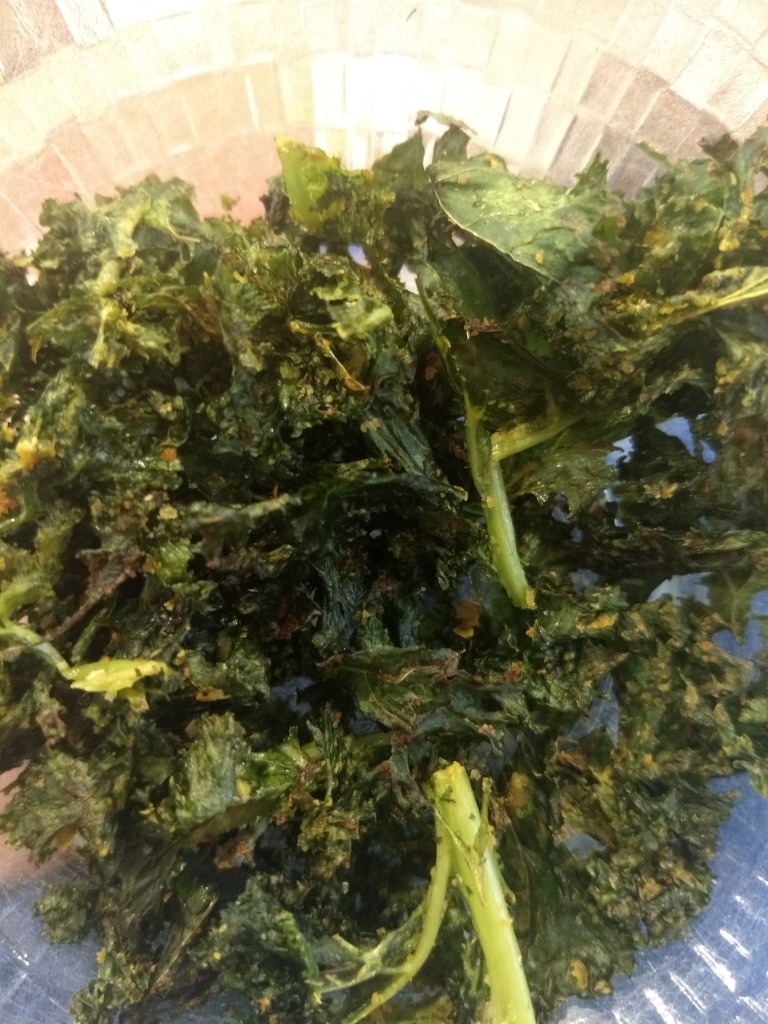
Put all of the ingredients in a big mixing bowl and mix it with your hands while scrunching and massaging the kale. The kale should have clumps of flavor clinging to it. If it doesn’t, add more of all the spices.

Lay out a single layer of seasoned and massaged kale onto a glass baking dish. Bake at 400° for 15 mins, then remove from dish and do your next batch. If the kale is still a little wet, you can put it on a baking sheet or in a dehydrator to fully dry and crisp up. Or just eat it all as it comes out of the oven, that’s what I usually do.

Vegan Gumbo

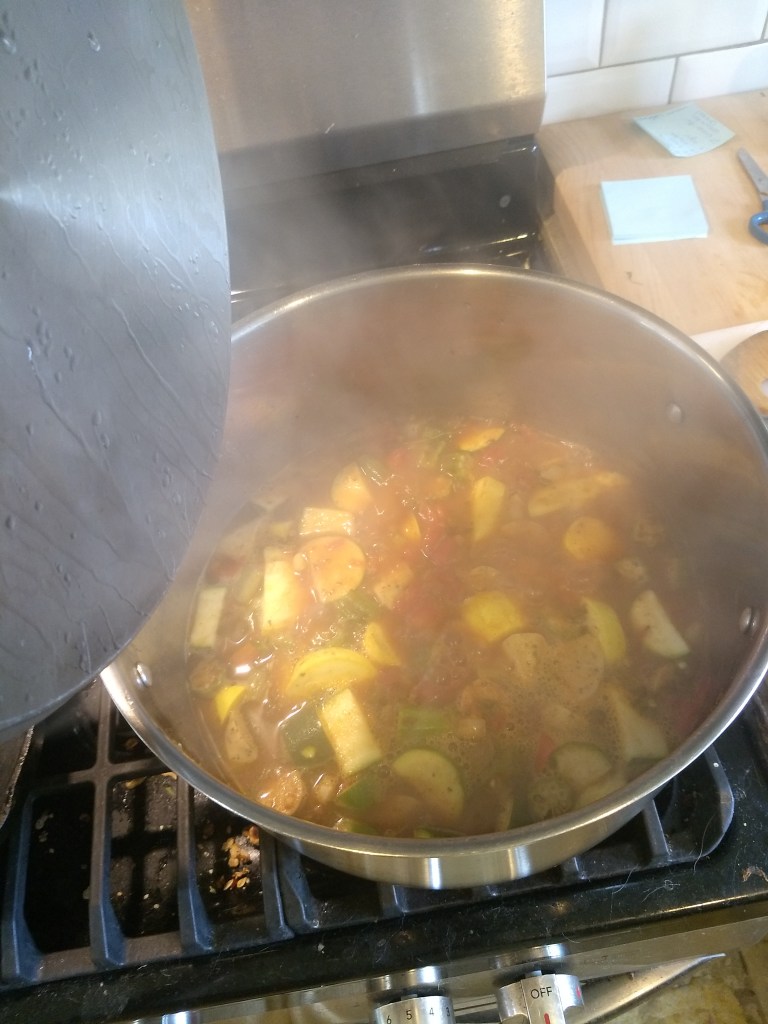
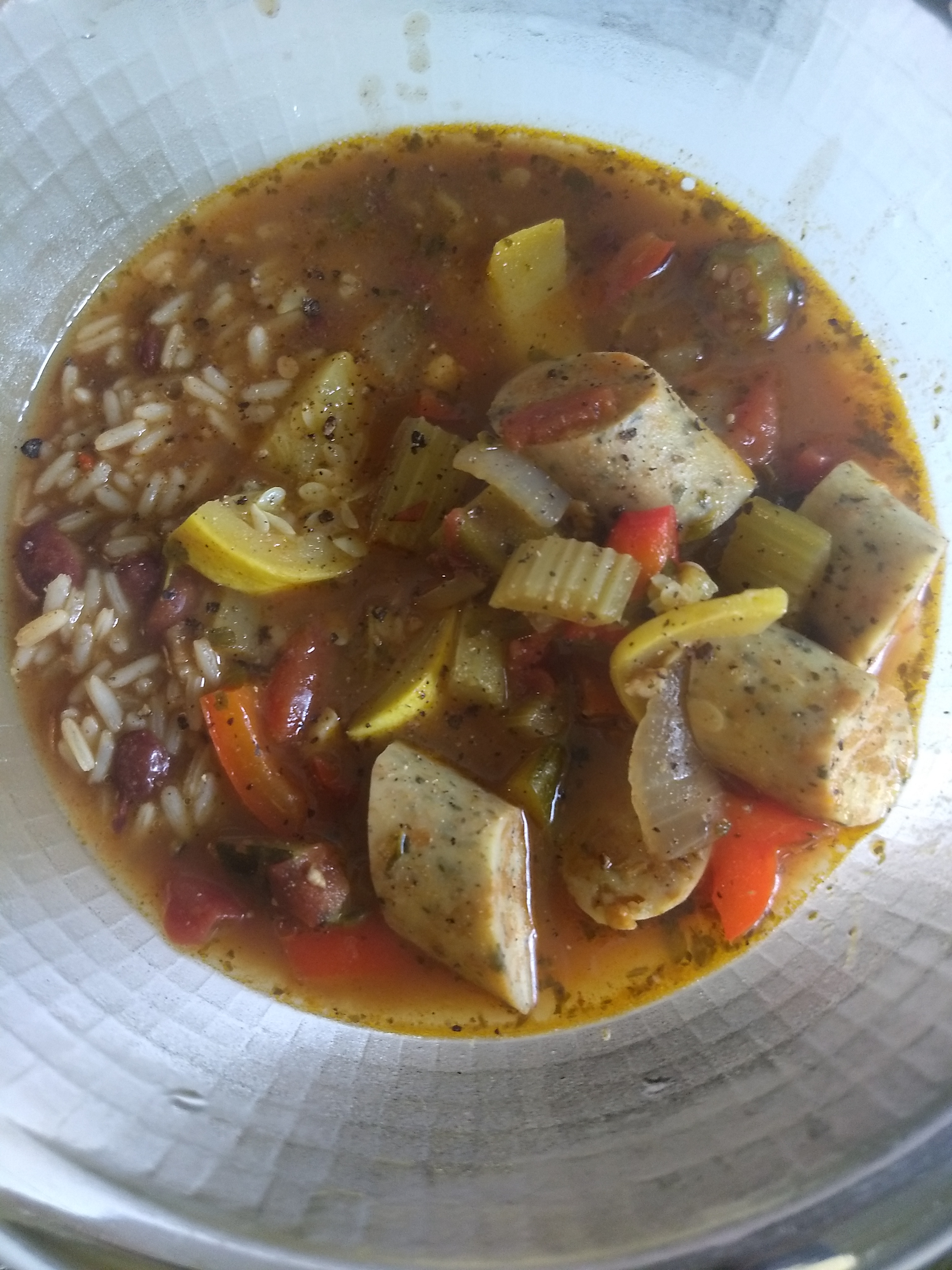
I had the worst day in a long time this Sunday. Part of why it was so bad was because I tried to order vegan gumbo, but the restaurant ghosted me. I was deeply unsatisfied until I made vegan gumbo the next day.

  • Olive oil (coat the bottom of the pan, this is an oil heavy recipe, but damnit you CANNOT mess with a roux)
  • 1/4 cup flour

Heat the oil in a soup pan. Add the flour. Whisk together and stir over medium heat until the roux gets dark like chocolate and smells like nuts. Then add in

  • 1 onion diced
  • 4 celery stalks diced
  • 1-2 bell peppers diced
  • 3-4 garlic cloves

Mix with the roux and cook til the veggies get soft/translucent. Then add

  • 1-2 cups of okra
  • 1 can diced fire roasted tomatoes
  • 2 zucchinis
  • 2 summer squash
  • 4 cups veg broth
  • Cubes of butternut or another winter squash would also be good if it’s winter and you can’t get summer squash
  • 1/4 c thyme
  • 1/4 c oregano
  • 2-3 tablespoons paprika
  • Hot pepper flakes of choice
  • Black pepper

Bring to a boil then simmer for an hour. The longer it cooks the better. Serve with red beans and rice and/or cornbread

I tried putting a vegan sausage in this but the sausage was trash so I ended up picking it out of the gumbo. If you can find a vegan andouille sausage, put it in the gumbo!!!

I read medical studies

when I’m feeling symptomy and trying to keep my hopes up that I’m staving off permanent damage to my colon.

2020 seems to have been a good year for medical studies on diet and Crohn’s disease, although of course it wasn’t a good year for literally anything else in the entire world, other than introverts seeking extreme hermitty isolation (also me).

If you want a glimpse into my world, check out PubMed and search for “Crohn’s diet.” Scan for articles from 2020. There is hope!!

Design a site like this with WordPress.com
Get started