The Hype

Whole food plant based eating has a lot of hype around it. It is marketed as a weight loss technique and a cure all for chronic lifestyle illness, such as high blood pressure or diabetes. Does WFPB pass muster?

Eating plants does have benefits to your health, namely high fiber, low calorie, and nutrient density. And it seems that for most people, when they cut oil and other refined foods from their diet, they can easily lose weight without cutting portions.

But some caveats. Eating fruits and vegetables for the bulk of your diet has an impact on satiety. You have to work in whole grains, legumes, and starchy vegetables in order to feel full. This is a skill and takes time to master. Being hungry all day sucks, it sucks your energy, and it is a pretty quick way to revert to your old eating habits.

Some chronic illnesses, such as hypothyroidism, will not be impacted by a WFPB diet. I basically stand no chance of losing weight when the thing that runs my metabolism is broken. Being mindful of how certain foods affect chronic illness is still a concern with WFPB. Grapefruit is a key example of a food that has interactions with numerous medications. Far from a cure all for chronic illness, Whole Food Plant Based eating may have little or no impact on your chronic illness, depending on what it is.

Is there still a health benefit to eating mostly plants? Absolutely. And there is a growing amount of scientific literature on the topic. Search “vegan” or “plant based” on the National Institute of Health for current scientific research.

So what about Crohn’s disease? That is my point of inquiry. For me personally, it was easy to switch to WFPB. I had been vegan and vegetarian for years. I grew up eating a variety of fruits, vegetables, grains and legumes. I have not been lacking in inspiration for how to chomp down these plants.

It has been a year and a half since I stopped getting Remicade infusions. I was in remission when I stopped Remicade. I stayed in remission for over a year, then had a mild flare in July and August of 2020. (This was probably precipitated by stress eating freezer pizza and vegan ice cream because …2020.) My guts recovered in September. In January I started having signs of an increasingly healthy bowel.

So it appears, in this early course of my journey with Crohn’s, that eating a Whole Food Plant Based diet has helped me manage my disease, and achieve and remain in remission following an 8 week steroid course during my flare.

I’m not drinking the kool aid, however, and I am, as always, skeptical of diets and health fads. I would not be terribly surprised if my colon sought it’s revenge in unknown ways. But, let’s be real, when the advice is EAT PLANTS…that’s a pretty basic, no nonsense, common sense approach to a more healthy life.

So, eat more plants.
CDED Reflections

So I tried to manage my last Crohn’s flare with diet, and a heavy dose of steroids. I tapered off the steroids and did not have a relapse of symptoms. I believe this is because (1) steroids are a cheap, widely available, and effective treatment for Crohn’s flares, and (2) diet has an impact on gut health and functioning.

I am in clinical remission, but not “deep” remission because I do not want to get another colonoscopy, so it is unknown what is going on in my guts. So endoscopic remission is unverified.

I found that, while on the steroids, my symptoms fluctuated depending on diet. I found that the Crohn’s disease exclusion diet (CDED) has helped my symptoms, both during a full blown flare and when I eat something that messes up my guts.

For the most part, I am now on the Crohn’s disease maintenance diet, eating whole foods plant based the majority of the time. I mostly eat unprocessed vegan meals that I cook at home. I have tried to limit restaurant food to once a week, as I am trying to eat a diet very low in processed oils.

If I experience Crohn’s symptoms, I return to the basic Crohn’s disease exclusion diet, and I eat the mandatory foods: 2 baked and cooled potatoes, 2 bananas, and an apple. This usually corrects the issue in a few days.

White rice is a go-to food all the time, a common restaurant food, and pairs well with basically all cuisine. I get more than enough fiber from lentils, beans, and vegetables, and haven’t needed to switch to strict whole grains.

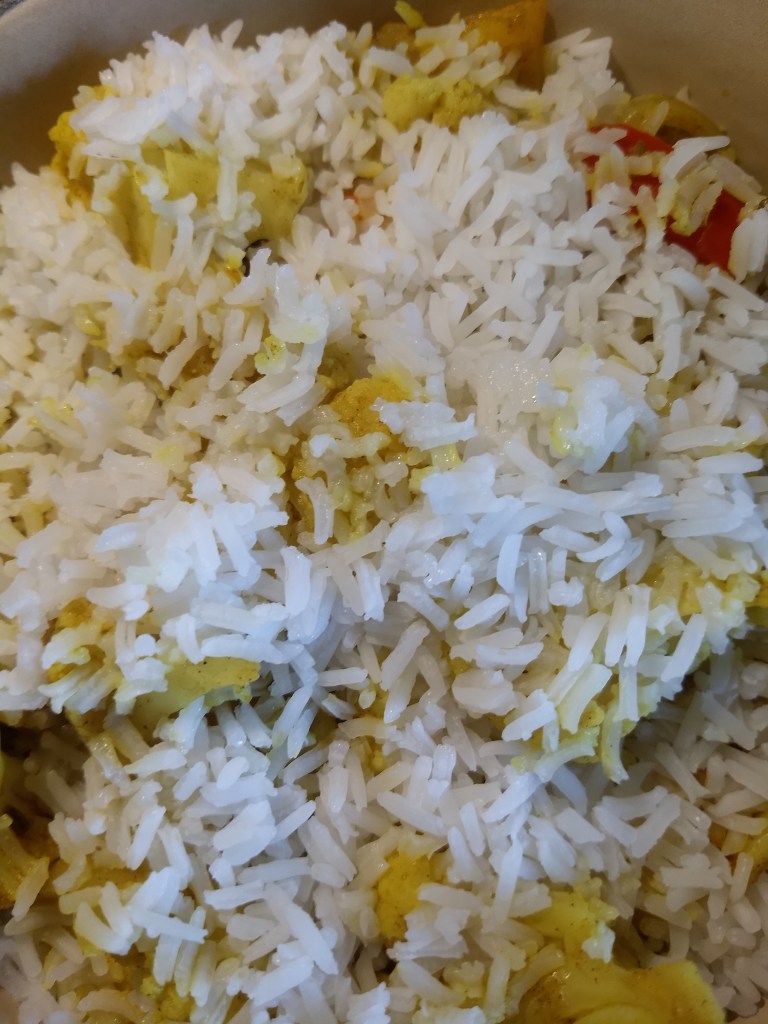
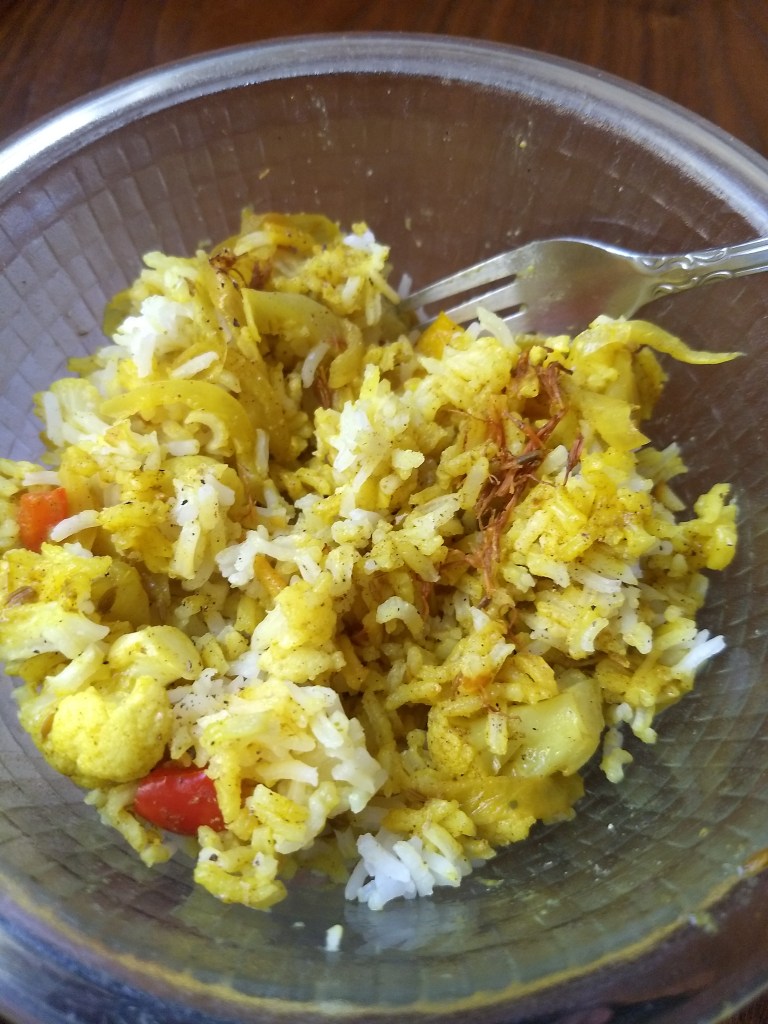
White rice is often parboiled, which gives it a shorter cooking time than brown rice, and it’s super easy to throw a meal together in 25-30 mins by cooking a rice mix and throwing in coarsely chopped vegetables.

I would like to get my blood work done again to see how my levels are, but the Rona makes that hard. I may get those labs done the next time I get my thyroid checked.

Life with Multiple Chronic Illnesses

In a word, confusing. What is causing the symptoms? Are these conditions impacting each other?

I have Crohn’s disease, hypothyroidism, and Seasonal Affective Disorder. What is causing my fatigue? My brain fog? Why does my whole body hurt? What is throwing off my sleep schedule?

When you are navigating multiple diagnosis, specialists make it more confounding. I had a gastrointerologist who refused to consider how my thyroid impacted Crohn’s. Luckily my PCP manages both my mental health and thyroid stuff, so she can at least see how the pieces fit together. After breaking up with my GI, I’ve been trying to pull my PCP more into Crohn’s management, but she is reluctant to do so (understandably) because she is not a specialist.

Hypothyroidism and SAD both get worse when the temperature drops and the sun goes away in the winter. Both can affect food cravings. Fatigue also makes it a challenge to cook every meal balanced and unprocessed. It’s a slippery slope that can lead to a Crohn’s flare.

An active Crohn’s flare can mean my thyroid medication isn’t being absorbed correctly. Chronic diarrhea and vomiting messes up my metabolism. Infection in my guts can lead to fever and other fluctuations in body temperature, regulated by thyroid. After a Crohn’s flare, what is the cause of lingering fatigue and brain fog?

How do I get the diagnostic testing and care I need to manage comorbid chronic illnesses during a public health catastrophe and global pandemic?

This has nothing to do with how much kale I eat, if I am doing yoga, or if I’m “deciding to be happy.” This is about an overspecialized medical industry that cannot see patients and their conditions as whole systems because they are miopically focused on specializations instead of taking a holistic systems approach.

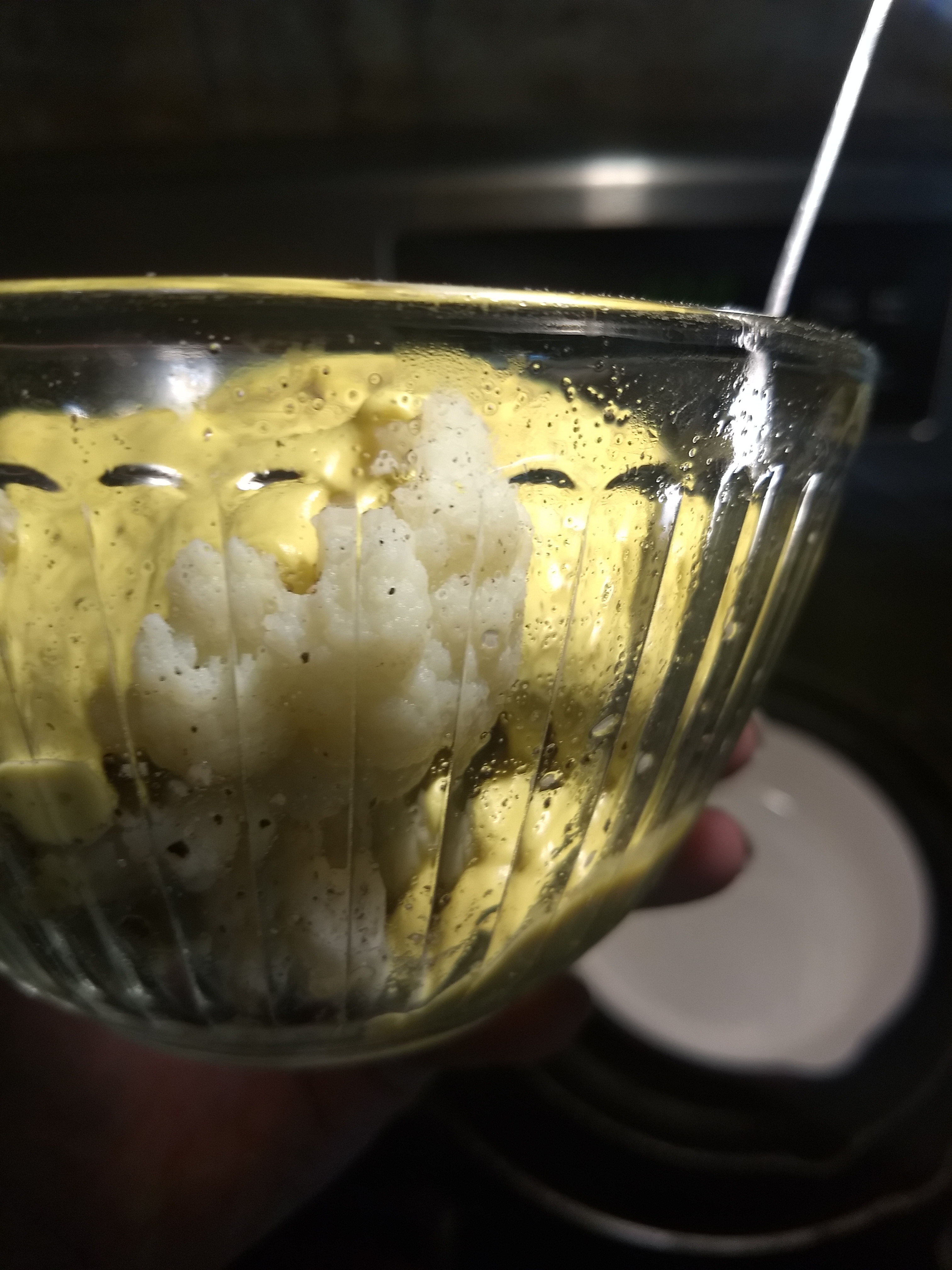
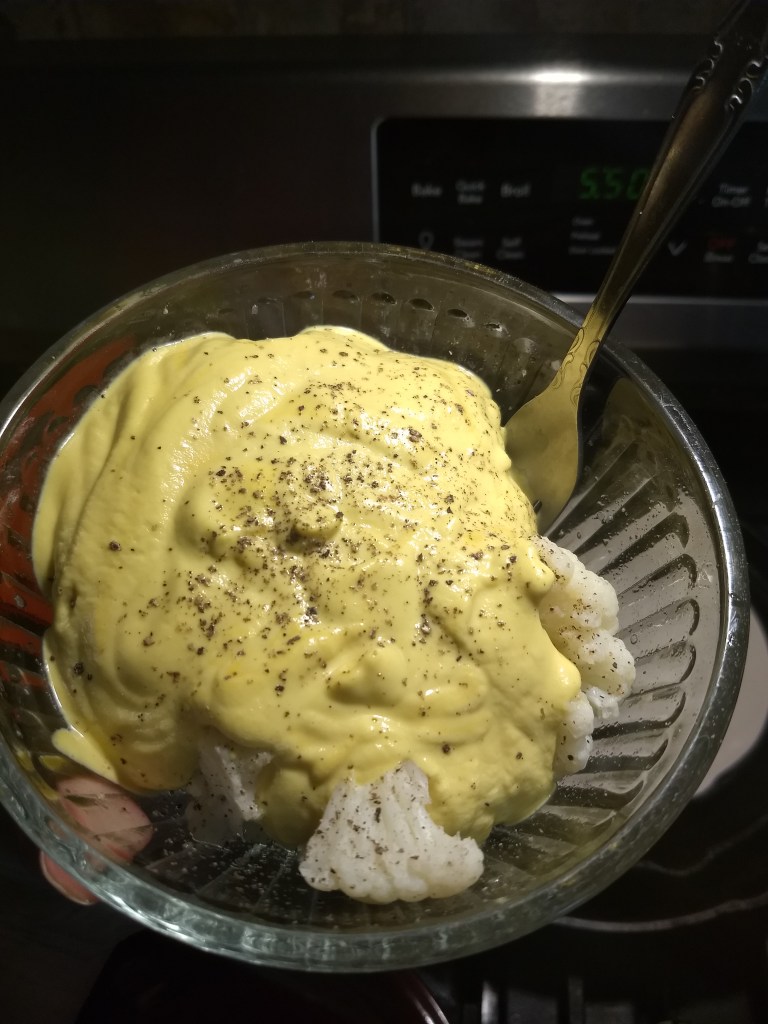
Cheezy Cauliflower

Fucked up must have sauce:

  • 1/2 cup raw cashews soaked over night (or soak in boiling hot water for 30 mins-1 hour), drain, blend on high for 1-2 minutes
  • 1/2 cup nutritional yeast
  • 1 tsp Garlic powder to taste
  • 1 tsp salt to taste
  • 1/2 tsp cumeric to taste
  • 1/2-1 cup boiled cauliflower (use more or less depending on the texture and flavor you want)

Pour sauce over boiled cauliflower. Eat the cauliflower with fresh cracked black pepper on top.

Surprising Maintenance

A close friend of mine died a month ago and I am surprised the grief didn’t put me in a flare. Its been rough.

I am eating whole food plant based most days, although not gonna lie I had some dank lamb gyro comfort food and that was pretty amazing. Eating at restaurants a lot but still trying to limit fried and greasy foods.

My mom got me an Ethiopian cookbook for my bday and I’m very excited to make that happen at home. Hoping investing in some spices now will pay off in flavor for months to come.

The sun set today at 1030am. I am seasonally affected.

Cauliflower Biriyani with Tahdig

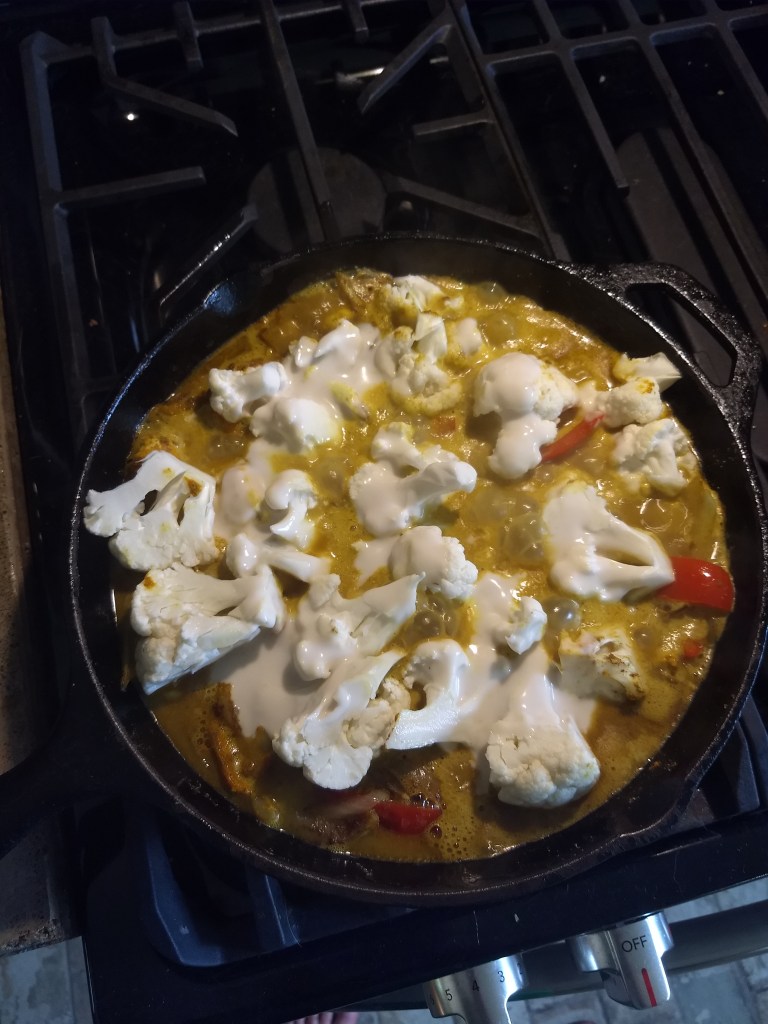
It’s a little different from what I expected because I didn’t drench every layer in ghee, but I made biriyani today and it was worth every minute of the two hours it took.

Simmering onion, pepper, cauliflower in spices, water and cashew yogurt
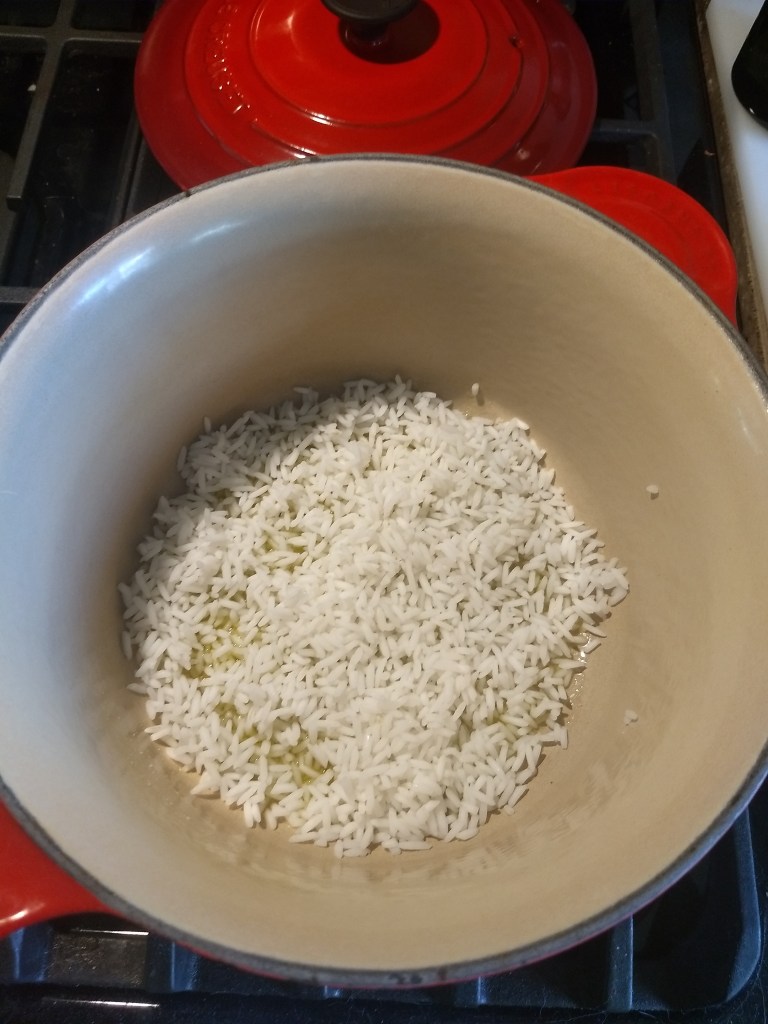
Olive oil, salt and parboiled rice; this will transform into the crispy tahdig
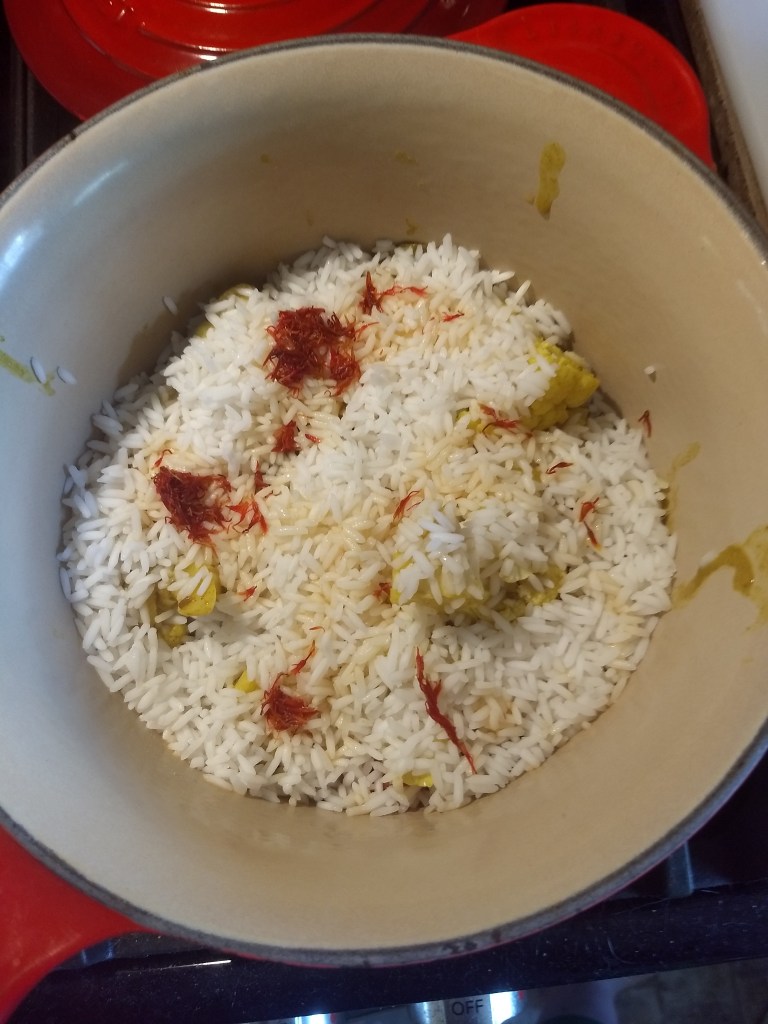
Add layers of veggies, rice, and saffron infused water. If you want the real biriyani experience, add pads of butter or ghee at this stage.
Steam for 30-40 mins, or until the rice on top is cooked. Mine took an hour, but I did not rinse and soak my rice.
Rice grains are all separate and not sticking together (in arabic, moufelfel)
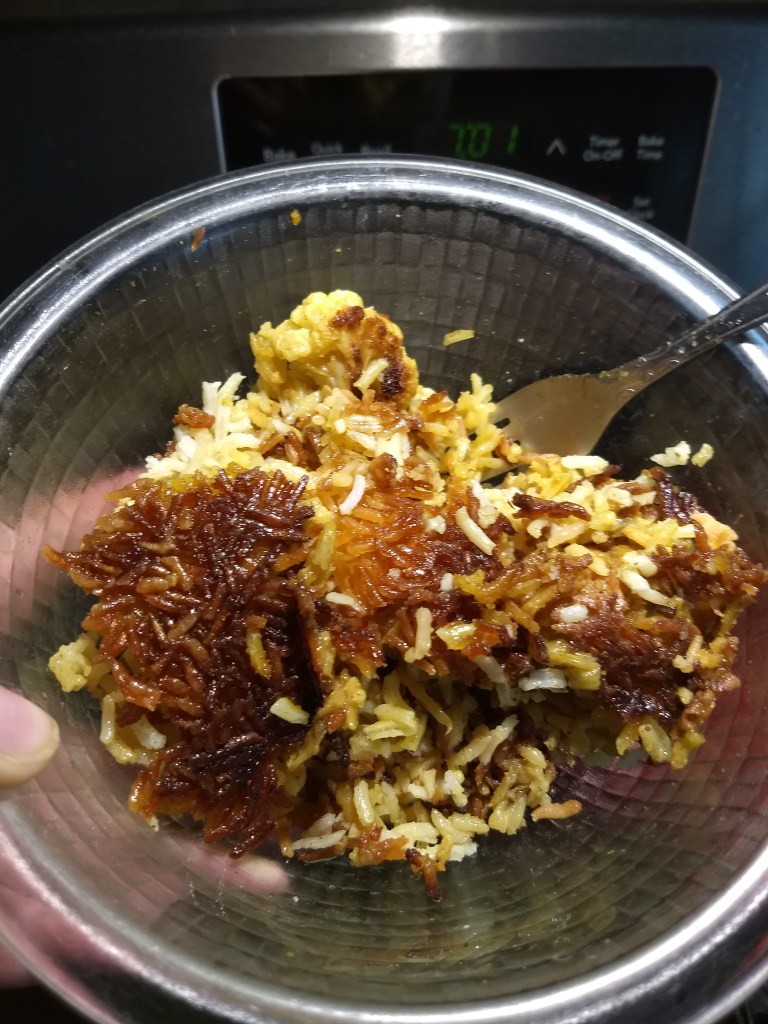
Crispy tahdig perfection at the bottom of the pot. Now accepting offers for marriage.

Food Diary 9-6-20

Today I taper down to my last 5mg of steroids. The CDED has been going well, especially because it allows me to eat vegan sushi. Yes I will eat sushi for every meal thank you.

I have developed a few delicious potato dishes.

One is smashed potatoes with a little water reheated and mixed with cooked spinach, with spices and salt and black pepper to taste.

Another is smashed potatoes with avocado, salt pepper and spices.

Another is smashed or cubed potatoes with a lemony pesto. Pesto: fresh basil and parsley, beet greens (or any other greens, I just happen to be growing beets in my yarden), juice of 1/2 lemon, salt pepper spices nutritional yeast and enough water to make it a semi liquidy sauce in your blender. A runny sauce is good because the leftover dry ass potatoes will suck it up.

So week one has been fine. The highlight was a particularly delicious cantaloupe. I had a 4 BM yesterday. I am anticipating some diarrhea when I taper down to 5mg but perhaps I’ll be pleasantly surprised?

Food Diary 8-29-20

Well I guess I was doing the Crohn’s disease exclusion diet wrong. The steroids are almost tapered out and I had explosive diarrhea the last 3 days. I got some better clarification on exactly what to eat and when.

I can’t really afford enteral nutrition/meal replacement. I’m going to try just following the allowed foods in the Crohn’s disease exclusion diet.

Here’s the new plan.

Mandatory foods:

  • 2 roasted potatoes a day
  • 2 bananas a day
  • 2 apples or applesauce

Other daily foods:

  • Strawberries
  • Melon
  • White rice
  • Tomatoes
  • Cucumbers
  • Avocado
  • Carrot
  • Spinach
  • Lettuce
  • Onion
  • Herbs, garlic, ginger
  • Lemons and limes
  • Fresh squeezed orange juice
  • Honey

And, regrettably, I will be taking a hiatus from coffee for 6 weeks. Seeds, nuts, legumes, & whole grains will get added in after 6 weeks, as well as a larger variety of fruits and vegetables.

Worst case scenario, after another 6 weeks I am still having diarrhea. At that point I will consider doing an elemental diet for 2-3 weeks, then back to this diet to reintroduce solid food. That should give me some time to save up money to buy at least 14 days worth of elemental meal replacers. Which costs $500, and even if you make it yourself, costs at least $300 and tastes like shit.

Yes I am so determined to not go back to biologics that I will endure even a disgusting liquid meal replacement as my only nutrition for two weeks. I’m fucking serious. There has to be something other than remicade and humira. FML.

Saag, oil free

  • 16 oz frozen spinach
  • 1/2 onion
  • 1 clove garlic
  • Juice of 1/2 lemon
  • 1 T tahini
  • 1 t cumin seeds
  • 1 t garam masala
  • 1/2 t ginger
  • 1/4 t black salt or asoefetida
  • Nutritional yeast, salt, pepper

Put a small amount of water in a saucepan. Steam onions and garlic. Add spinach. Cook on medium heat until it gets hot.

Put lemon juice and tahini in a small container with a lid and shake it to emulsify. The less liquid the better, try to make it creamy like sour cream consistency. Add more tahini to thicken if necessary.

Put spinach in blender. Add tahini cream and spice. Puree. An immersion blender would work too.

Serve with brown rice or flat bread.

Rice + Lentil Flavor Explosion

  • 1/2 c rice
  • 1/2 c green lentils
  • 1/2 onion cut into moons
  • 1/2 c peas
  • 2 dates chopped into 1/2 cm pieces
  • 1/2 t cinnamon
  • 1/2 t cumin seeds
  • 2 T berbere spice blend
  • 2 c water
  • Salt & black pepper to taste, + nutritional yeast to get those B vitamins!

Put everything in a sauce pan. Stir. Bring to a boil. Stir. Turn down heat to low summer for 45 mins. Stir. Let sit 5-10 min before serving.

The dates and cinnamon add a warm, earthy sweetness that compliments the savory cumin and berbere, and the bitterness of the peas.

Symptoms 8-21-20

  • Pain 2/10
  • Bloating 1/5
  • BM 5/7
  • Fatigue 1/10
Create your own website, free on WordPress.com.Create your own website.
Start free