Donald Trump Is A Jack Hole
I am going to give you a bunch of recipes for red split lentils. This is one of my all time most favorite foods. They turn into a savory perfect paste of flavor and don’t take super long to cook. You can find red split lentils at Indian groceries, international markets, and Trader Joe’s. Yes, they are way better than the green lentils.
Simple-Ass Lentils
Put all the ingredients in a pot. Bring to a boil then simmer on low 20 mins. The end.
Fancy-Ass Lentils
Cut the veggies. Put in a pot with a drizzle of oil or a little water. Start to saute them. Add the lentils. Stir it all around. Cover with enough broth or water to submerge all the food. Bring to a boil then simmer for 20 mins.
Want to get crazy? Add 1/2 cup rice or quinoa to the above dish and cook as long as the grain needs. Add extra water/broth and cook longer if needed. This is a dish I call The Mush.
Spicy-Ass Lentils
Saute the veggies. Add the spices. Mix it around to heat up the spices so they smell good. Add the lentils. Stir it around. Add broth or water. Bring to a boil then cook 20-30 minutes or until lentils turn to a mush. Add extra oil or butter if you want it really rich. Serve with injera, Ethiopian fermented flat bread.
I’M SERIOUS ABOUT HOW GOOD RED SPLIT LENTILS ARE. EAT THEM.
I am an unabashed emotional eater. I eat when I’m emotional, and eating makes me emotional. I love food.
We need foods that comfort us when we are sick. When I was too sick to work, I would still walk over to the sushi restaurant a block from my house once a week for supper with a friend. I couldn’t afford it, and it probably wasn’t very good for my bowels, but I needed to eat a food I loved. I needed to enjoy food.
Crohn’s doesn’t just destroy your ability to digest. It destroys your ability to relate to food in a healthy way. No one should be afraid to eat. No one should avoid nourishment because of pain avoidance. But this is what happens with Crohn’s, and for many people the bodily experience of the disease turns you off from food.
How can we eat healthy when we are afraid to eat fruits and vegetables? When we are told to eat low fiber diets and processed foods? The body cannot heal itself without proper nutrition, but it also can’t heal itself if it rejects the foods that are the vehicles for that nutrition.
We have to figure out a way to make nourishing food digestible and palatable. Our food must nourish us and comfort us, so we will rebuild a healthy relationship to food.
In those first months of a flare, we have to figure out what we can tolerate that will still provide us with essential nutrients and healing sustenance. After we are able to eat more variety in our diets, we must nurture this relationship to feel comforted by the wholesome foods — the whole grains, beans, lentils, and starchy vegetables.
I was in the international market the other day, staring at an aisle of legumes. An entire aisle! The noisy din of the store was muffled by the plastic sacs of red split lentils, chaana, mung beans. I felt safe there, surrounded by food I knew wouldn’t hurt my body.
So that’s weird.
But the moral of the story is, as we shift our thinking and our relationship to food, we can find comfort in surprising places. I used to drive to Cane’s or Taco Bell after a hard day of work when I needed to eat something immediately and take a nap, when I needed something hot and rich to hit my stomach lining and release hormones of satiety into my brain receptors.
Now I feel that way about my mom’s three bean salad, sitting in the fridge waiting for me at home.
Calico Salad
Put all of the ingredients in a large bowl. Mix. Let sit in the fridge for 24 hours. You can add any kind of bean to this. Yellow wax beans are a very nice addition!
I hated canned green beans until I realized they were in this salad. Now my world is different. Give it a try.
There is a certain amount of guilt that accompanies taking a sick day. People who are not chronically ill don’t take time off for fatigue. People who are not chronically ill don’t have the innate sense that the return of tell-tale symptoms require rest and self care. Alas, I am chronically ill, and my body sends me warning signals when I need to slow down.
I would like to take the approach of my self sacrificing colleagues in the teaching profession who power through even serious illnesses. Don’t they seem like heroes, coming to school depite their discomfort to serve their student population? Spreading their germs all over everything?
Actually, scratch that. No one should be expected to turn up to work sick. Especially people who’s health can nose dive when they are forced to exert themselves unnecessarily, due to some bloated sense of service or self sacrifice. As care takers, teachers should be encouraged first and foremost to take care of themselves. This reduces stress, burnout, and makes people better teachers.
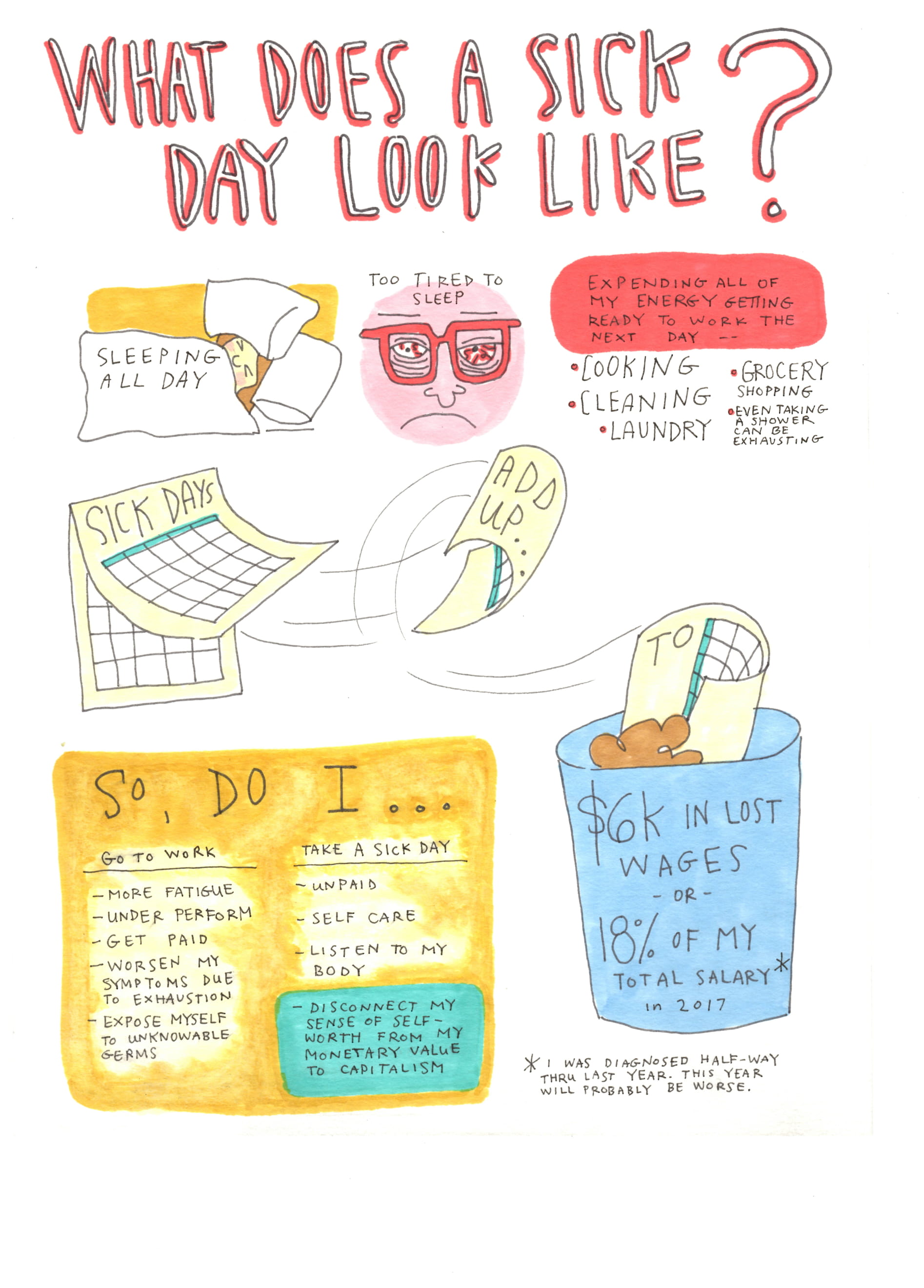
I am incredibly thankful that remission has allowed me to work full time, in spite of this incurable disease. I am able to maintain my independence, housing, and health insurance. You know, the basic things. Human rights.
Staying in remission requires close attention to the feedback my body is giving me. Increasing fatigue, joint pain, pain flares, brain fog, and the d are all signals to rest, hydrate, and regulate my diet. Although remission is similar to life before Crohn’s, it’s definitely not the same.
On the menu for today:
What’s the big deal with meat, anyway?
Animals breathe in heavy metals from industrial pollution and eat plants covered in pesticides. These chemicals accumulate in their flesh and consumed by people.
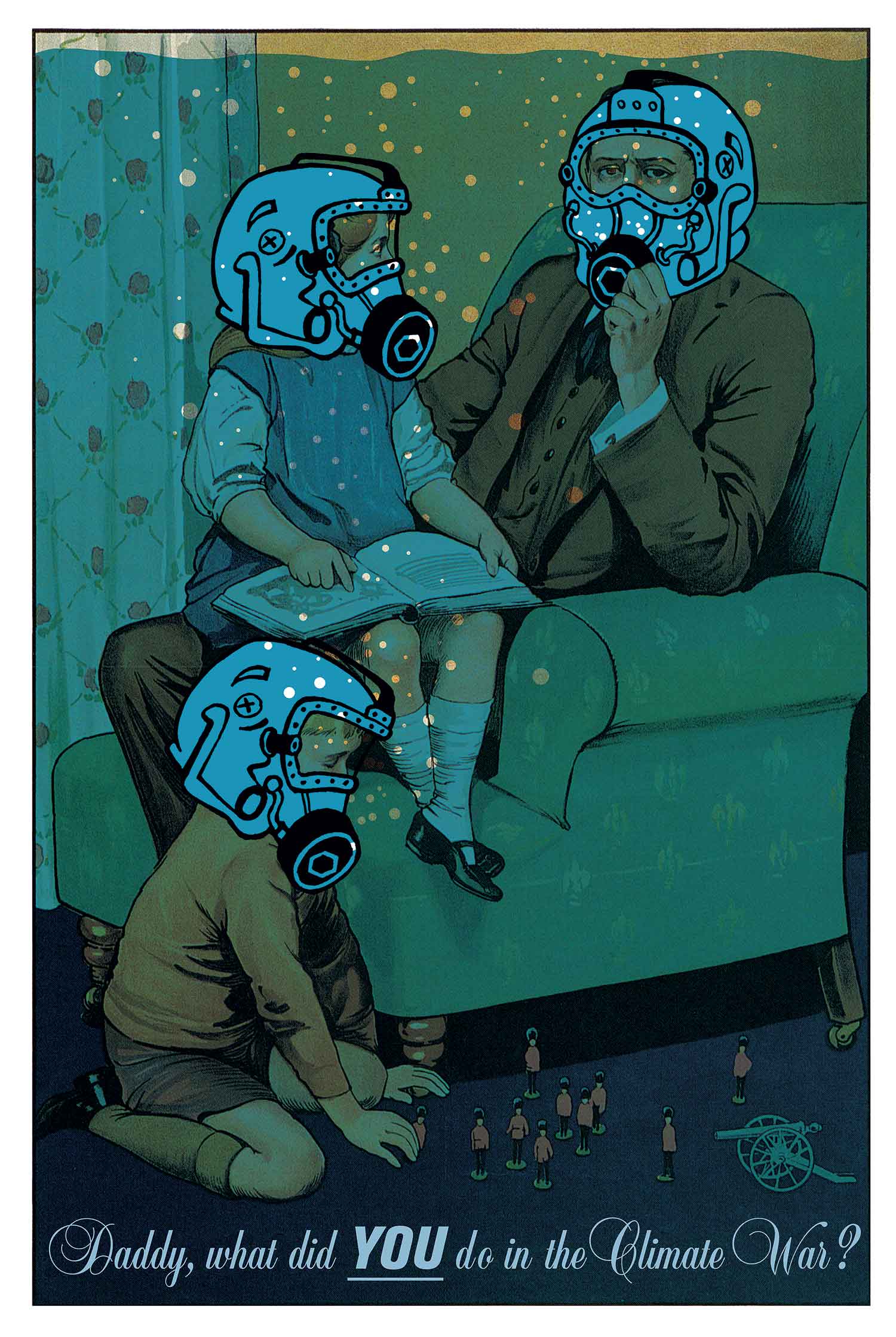
Meat is bad for the environment and speeds climate change. The meat industry heavily relies on fossil fuels. The beef industry requires land for pasture, which requires deforestation. Signal memories of the Amazon burning in Brazil under the fascist Bolsonaro regime.
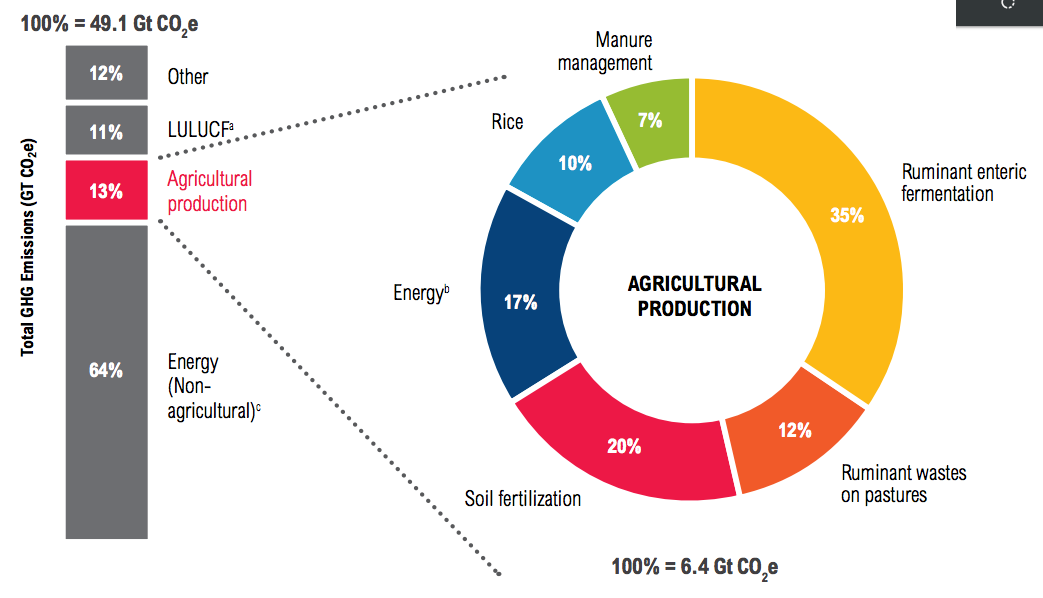
With factory farms, there is the issue of waste. Mountains of cow poo. Cow pies should be turning into dust on a sunny pasture, not festering in waste ponds, leeching into rivers and streams, and fouling up ecosystems. Furthermore, cows produce 37% of methane emissions, and 65% of nitrous oxide emissions. These are potent greenhouse gasses that directly contribute to climate change.
Growing and feeding animals for human consumption uses massive amounts of agricultural resources that could be used to easily feed all the people in the world. Only 55% of crop calories go to direct human consumption. The rest go to animal feed and biofuel.
This map shows crops grown for human consumption (green) versus crops grown for animal feed and fuel (purple).

Meat costs US taxpayers billions of dollars in subsidies. Most of the subsidies for American farmers go to crops humans don’t eat: feed crops for animals, tobacco, and cotton. Fruits and vegetables for human consumption do not get subsidies. Because of these policies, meat prices are artificially low, and fruits and vegetables are not.
But we’re still paying for the meat: it comes directly out of our paychecks, and we’re paying with our health. Highly subsidized foods make up the majority of calories Americans consume, and also pose significant health risks.
Meat as it is available to US consumers is not a healthy option. The World Health Organization conducted research that shows an association between red meat consumption and colorectal cancer. This has to do with how red meat is prepared, usually cooked over high heat. Red meat was classified as a Group 2 carcinogen. Processed meat, on the other hand, was classified as a Group 1 carcinogen. This means the WHO believes it to be strongly correlated with colorectal cancer. Other Group 1 carcinogens include tobacco and asbestos.
Based on this information, I believe meat and animal products are bad for me, the environment, and global food security. I know that my personal choice to stop eating meat will not change the powerful corporations and highly subsidized industries that make bank on meat.
In order to sustain humanity in the future, we need political and social shifts globally. In America, this starts with repairing our democracy, increasing civic participation in government, and ending corporate campaign finance and lobbying. To do my part, I teach world history, current events, community leadership, and social movements to my students.
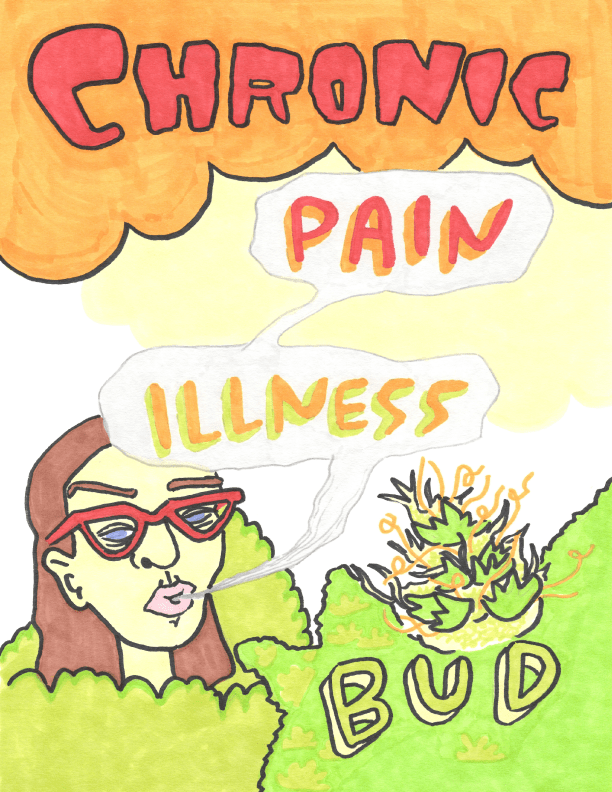
Until I was diagnosed with Crohn’s disease, pain always had a purpose. Something hurt because I smashed, cut, burned, bruised, or otherwise maimed myself. Then came a new chapter of my life: mysterious pain flares.
Inflammatory and Auto-Immune diseases are unique in their ability to inflict random pain on their unwitting victims. Example: I just woke up, and I can’t turn my head. My neck is frozen in agonizing pain. Why, you ask? No reason, just lucky I guess. Example: I stood up and threw out my back for two weeks. ???
Around the time I came down with Crohn’s disease, my best friend was afflicted with Fibromyalgia. While I would never wish unrelenting pain on my bestie, we have both found solace in each others discomfort, and help each other problem solve ways to reduce the pain. They, more ardently than I, as my pain comes and goes, and theirs is unremitting.
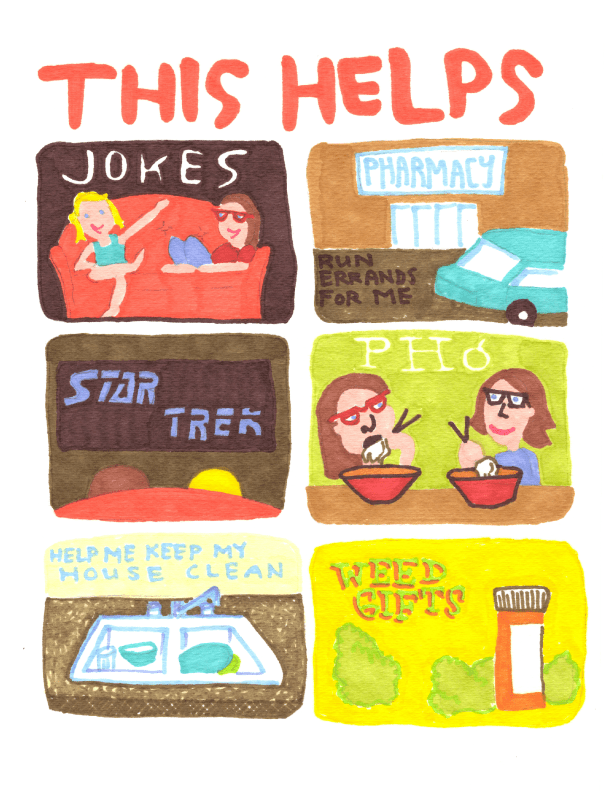
Heating pads. Acupressure. Hot balls of pink Himalayan sea salt. Back pokers. Shoulder jabbers. Once I laid on a wooden toy onion that was just the right size to hit the pressure point in my butt cheek. Foam rollers. Yoga positions. Working out. Laying down. Muscle relaxers. Kratom. Ben Gay. Icy Hot. Tiger Balm. CBD lotion. CBD tincture. CBD oil capsules. Massage. Acupunture. Steroids. Tylenol. Tramadol. Purple Gorilla. Kush Wreck. Clementine.
Crohn’s disease is hell on my joints, especially during flares. For a year after my flare, I still experienced random excruciating pain, mostly in my knees, elbows, back, shoulders, and neck. I spent one week in bed high on Tramadol and medical marijuana in the worst pain in my life when my tailbone suddenly became inflamed. I would wake up gasping in pain as electric boa constrictors crushed my spine. I requested an x-ray from my PCP the pain was so terrible. Incidentally, I seriously disturbed my friend who had to drive me to the hospital, as getting in and out of the car, and even walking, required the greatest finesse, and large amounts of screaming and swearing.
Results of the x-ray? “Looks normal! Seems fine!”
Luckily the pain subsided after about 7 days, just in time for me to start my new full-time job teaching History, an ominous beginning to my dream career that I still truly hope won’t be sabotaged by this stupid incurable disease.
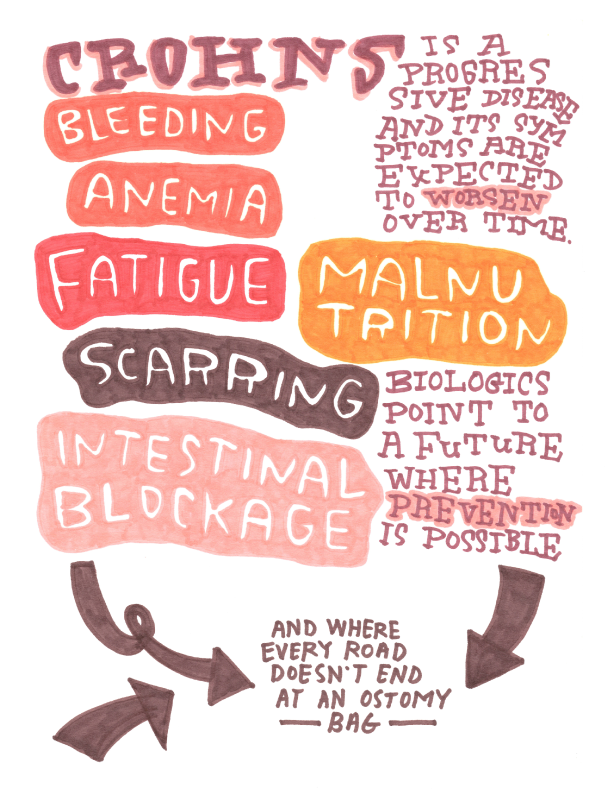
The point is there is no point. Bodies just hurt sometimes, in ways that are inconceivable until they happen to you. The doctors can’t see anything wrong, and their medicines don’t work, because there isn’t recognizable trauma, just chronic and unrelenting pain. Research suggests chronic pain leads to more chronic pain, as the neural pathways for pain receptors reinforce themselves over time. People with chronic pain experience pain differently than people without it. It is an entirely different beast.
You have to do what makes you feel good, or at least less terrible. You have to take time to rest, and writhe around in pain, and give your body a chance to work it out. Practice self-care and be gentle with yourself, this pain isn’t your fault.
It starts with trauma.
Your body is tearing itself apart. You are in extreme pain. You have never been this sick in your life. You can’t think straight, you’re fatigued, the sight of food repulses you, you are violently ill. Under these conditions, you will make the most important decisions of your life: decisions that might bankrupt you, or bring you to the brink of death.
That’s how Crohn’s disease leads its victims to the seemingly best solution: hospital stays, medical care, and Big Pharma. When you’ve suddenly lost 10% of your body weight, its hard to say no to a doctor’s advice.
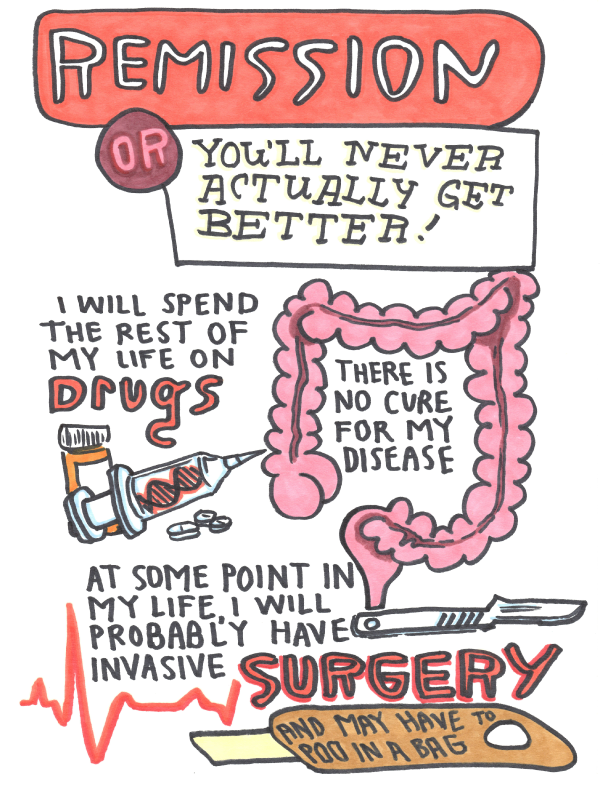
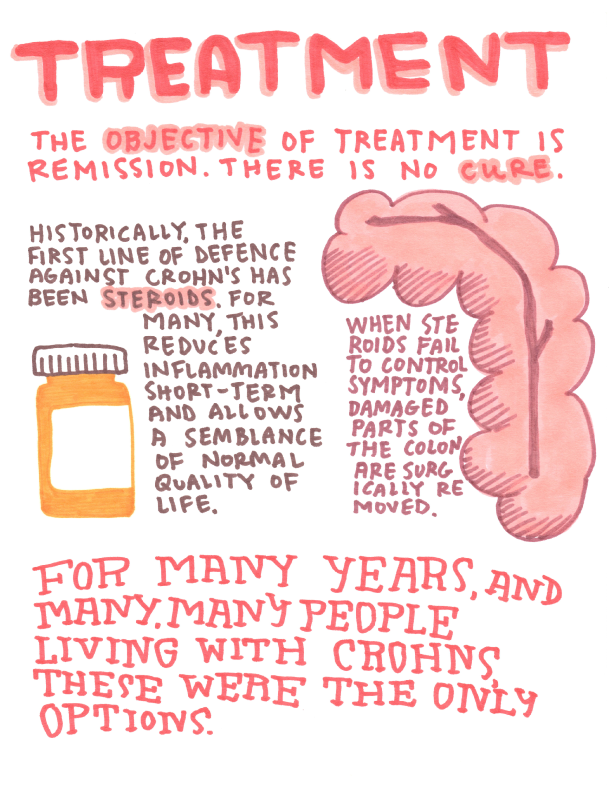
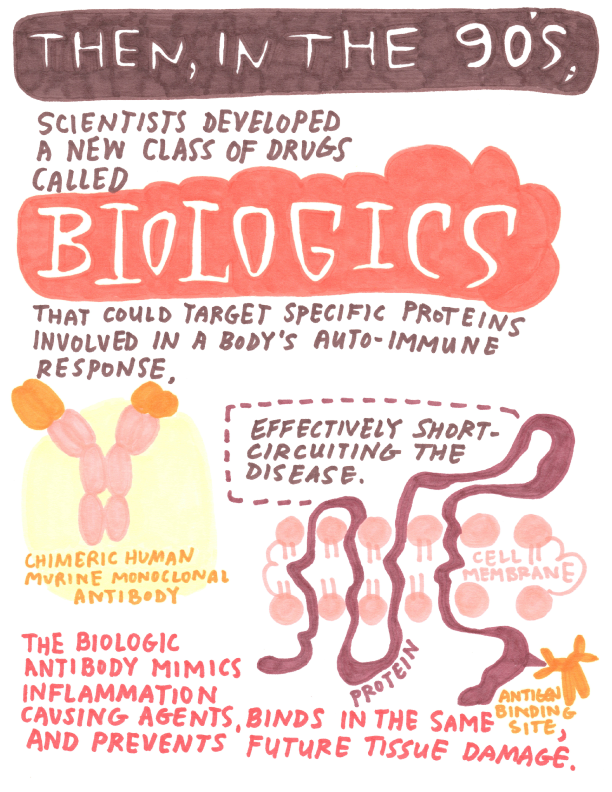
“We’re going to start you on the most aggressive treatment: steroids followed with a biologic infusion. Eventually we may need to add in immunosuppressant drugs, or switch you to several different biologics if they first one fails.”
Sure thing, doctor, you’re the specialist with the advanced degree. I’d just like my asshole to stop pissing out blood.
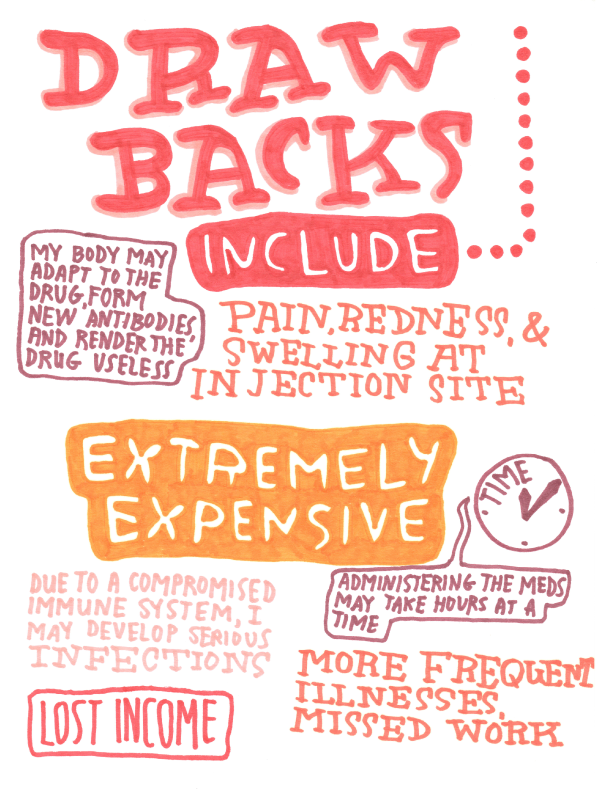
In the hours that you are laying awake, filled with rage and steroids, you will have plenty of time to call your insurance company and arrange the prior authorization necessary to cover the cost of your new best friend, Remicade. Remicade will be delivered intravenously to you at 2, 4, and 8 weeks in an infusion suite at the hospital. The drug itself costs $30,000 a treatment, in addition to the hospital fees. Of course, there’s also the stigma and the gripping fear of taking chemotherapy drugs with the potential for terrible side effects, like: lymphoma and colon cancer.
Maybe you’ll have time between naps, crippling pain, and slowly drinking flavorless broth to contact the makers of Remicade and ask the company to give you the drug for free, a program they set up because they know it would be unethical to market a life saving medication that no one can afford.
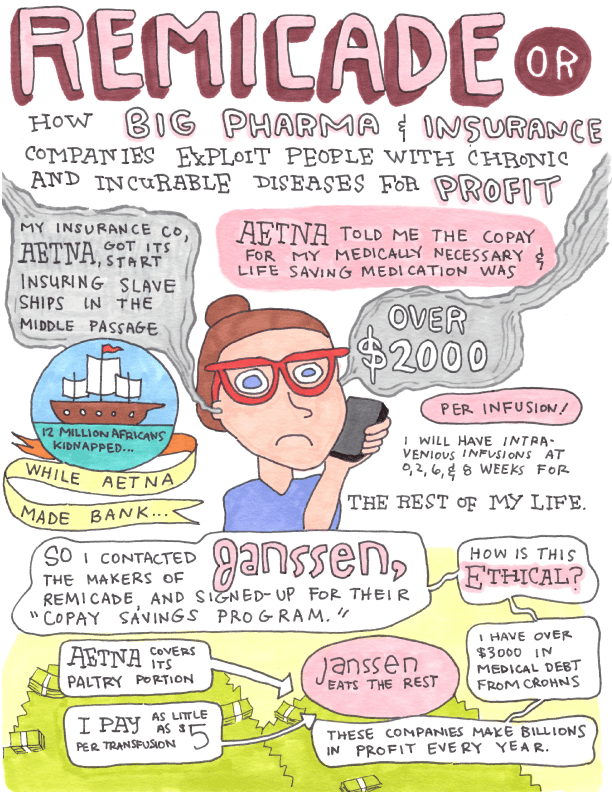
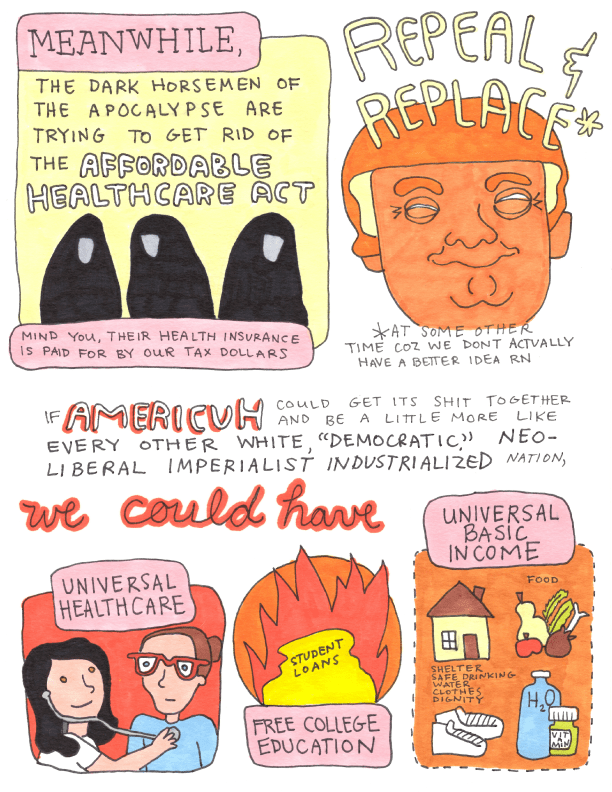
Now that your full time job is managing your disease, and your part time job is researching how to get access to treatment for your disease, and your third shift job is worrying about the future and how you’ll pay for everything, and also roid rage, you can rest easy that the bureaucrats and executives at Big Pharma Inc and Big Insurance Co have your best interests in mind.
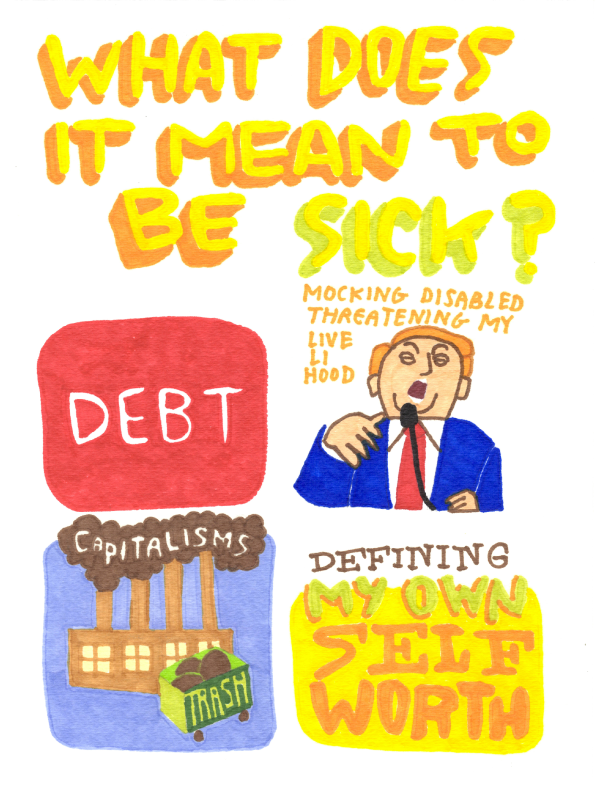
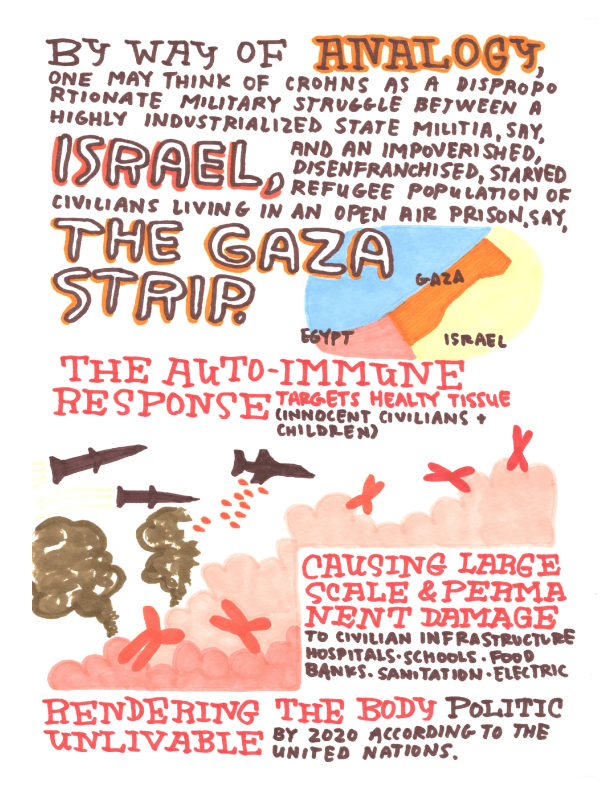
They are definitely not emboldened by the Trump administration to suck every last dollar out of your lifeless body, following a profit motive to extort sick and dying people, and then refusing to allow anyone coverage for mental health treatment. That we need. Because their bullshit is making us crazy.
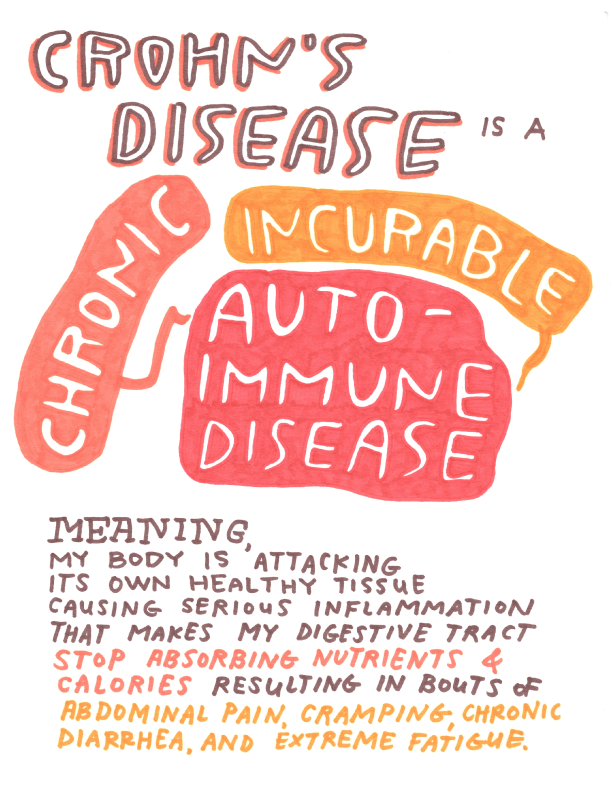
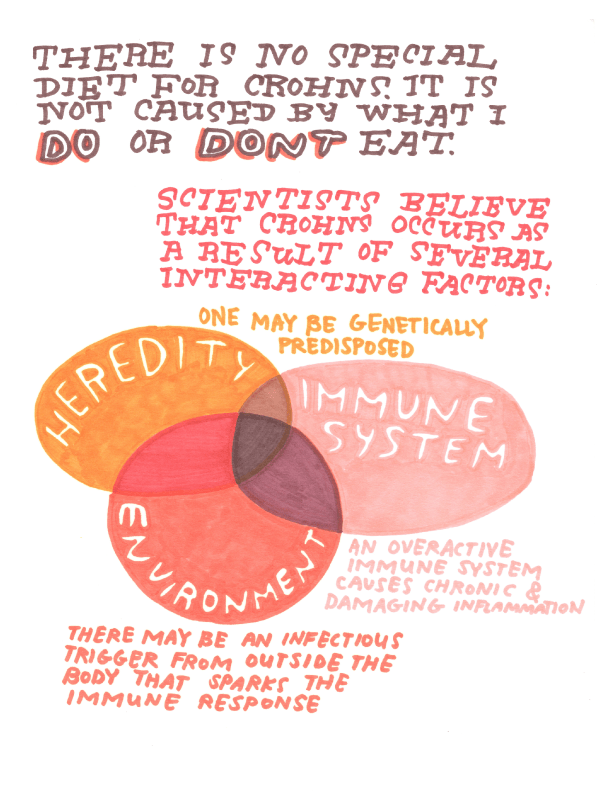
Scientists have not conducted large scale, randomized controlled studies on Crohn’s and diet. What studies have been done have shown correlation between whole foods plant based diets and a protective effect against developing Crohn’s disease. A recent case study details the story of a 25 year old man with severe Crohn’s that was not responding to medication. He achieved remission and complete mucosal healing after 6 months on a whole foods plant based diet in conjunction with Remicade. The diet he followed was the one recommended by Chiba, et al.
In 2019, a 12-week prospective trial was conducted on 78 children with mild to moderate Crohn’s disease. This trial compared the effectiveness of complete enteral nutrition, or food replacement shakes, with a diet of partial enteral nutrition coupled with the Crohn’s Disease Exclusion Diet (CDED). The trial found that PEN & CDED was better tolerated among the children studied, and that both diets were effective at inducing remission by week 6 of the study.
 Eating Vegan with Crohn's Disease