What’s the big deal with meat, anyway?
Animals breathe in heavy metals from industrial pollution and eat plants covered in pesticides. These chemicals accumulate in their flesh and consumed by people.
Meat is bad for the environment and speeds climate change. The meat industry heavily relies on fossil fuels. The beef industry requires land for pasture, which requires deforestation. Signal memories of the Amazon burning in Brazil under the fascist Bolsonaro regime.
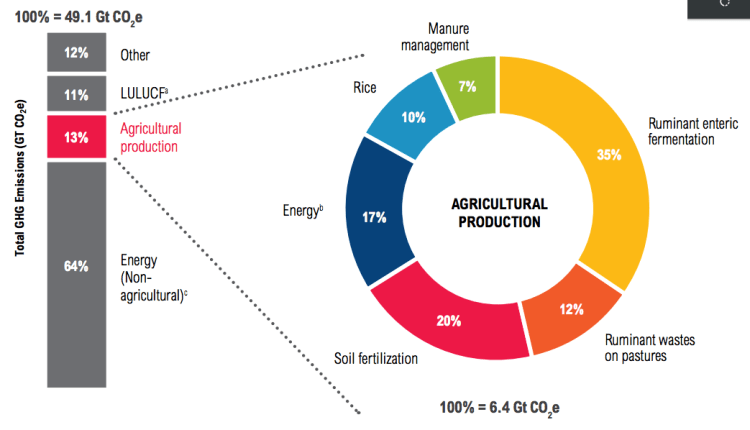
With factory farms, there is the issue of waste. Mountains of cow poo. Cow pies should be turning into dust on a sunny pasture, not festering in waste ponds, leeching into rivers and streams, and fouling up ecosystems. Furthermore, cows produce 37% of methane emissions, and 65% of nitrous oxide emissions. These are potent greenhouse gasses that directly contribute to climate change.
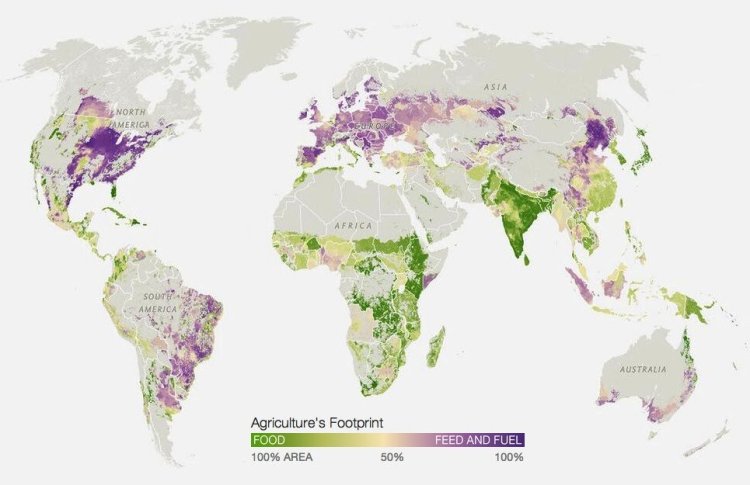
Growing and feeding animals for human consumption uses massive amounts of agricultural resources that could be used to easily feed all the people in the world. Only 55% of crop calories go to direct human consumption. The rest go to animal feed and biofuel.
This map shows crops grown for human consumption (green) versus crops grown for animal feed and fuel (purple).
Meat costs US taxpayers billions of dollars in subsidies. Most of the subsidies for American farmers go to crops humans don’t eat: feed crops for animals, tobacco, and cotton. Fruits and vegetables for human consumption do not get subsidies. Because of these policies, meat prices are artificially low, and fruits and vegetables are not.
But we’re still paying for the meat: it comes directly out of our paychecks, and we’re paying with our health. Highly subsidized foods make up the majority of calories Americans consume, and also pose significant health risks.
Meat as it is available to US consumers is not a healthy option. The World Health Organization conducted research that shows an association between red meat consumption and colorectal cancer. This has to do with how red meat is prepared, usually cooked over high heat. Red meat was classified as a Group 2 carcinogen. Processed meat, on the other hand, was classified as a Group 1 carcinogen. This means the WHO believes it to be strongly correlated with colorectal cancer. Other Group 1 carcinogens include tobacco and asbestos.
Based on this information, I believe meat and animal products are bad for me, the environment, and global food security. I know that my personal choice to stop eating meat will not change the powerful corporations and highly subsidized industries that make bank on meat.
In order to sustain humanity in the future, we need political and social shifts globally. In America, this starts with repairing our democracy, increasing civic participation in government, and ending corporate campaign finance and lobbying. To do my part, I teach world history, current events, community leadership, and social movements to my students.
 Eating Vegan with Crohn's Disease